
Corinne Fowler is Professor of Colonialism and Heritage in Museum Studies at the University of Leicester. Between 2018 and 2022, Fowler directed a child-led history and writing project called 'Colonial Countryside: National Trust Houses Reinterpreted'. She also co-authored the 2020 National Trust report on its country houses' historical links to the British Empire. Her most recent book is Green Unpleasant Land: Creative Responses to Rural England's Colonial Connections.
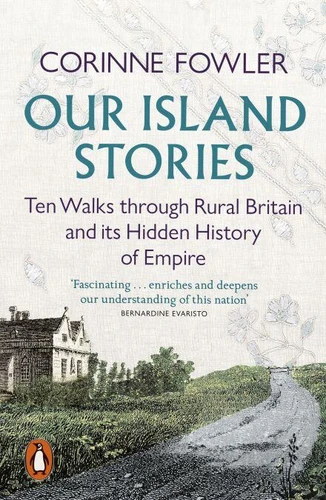
Our Island Stories. Country Walks through Colonial Britain
Par :Formats :
Disponible dans votre compte client Decitre ou Furet du Nord dès validation de votre commande. Le format ePub protégé est :
- Compatible avec une lecture sur My Vivlio (smartphone, tablette, ordinateur)
- Compatible avec une lecture sur liseuses Vivlio
- Pour les liseuses autres que Vivlio, vous devez utiliser le logiciel Adobe Digital Edition. Non compatible avec la lecture sur les liseuses Kindle, Remarkable et Sony
- Non compatible avec un achat hors France métropolitaine
 , qui est-ce ?
Notre partenaire de plateforme de lecture numérique où vous retrouverez l'ensemble de vos ebooks gratuitement
Pour en savoir plus sur nos ebooks, consultez notre aide en ligne ici
C'est si simple ! Lisez votre ebook avec l'app Vivlio sur votre tablette, mobile ou ordinateur :

- Nombre de pages432
- FormatePub
- ISBN978-0-14-199984-5
- EAN9780141999845
- Date de parution02/05/2024
- Protection num.Adobe DRM
- Infos supplémentairesepub
- ÉditeurPENGUIN
Résumé
'An essential and fascinating book ... enriches and deepens our understanding of this nation' - Bernardine Evaristo'A powerful book that brings the history of the Empire home - literally' - David OlusogaThe countryside is cherished by many Britons. There is a depth of feeling about rural places, the moors and lochs, valleys and mountains, cottages and country houses. Yet the British countryside, so integral to our national identity, is rarely seen as having anything to do with British colonialism.
Where the countryside is celebrated, histories of empire are forgotten. In Our Island Stories, historian Corinne Fowler brings rural life and colonial rule together with transformative results. Through ten country walks, roaming the island with varied companions, Fowler combines local and global history, connecting the Cotswolds to Calcutta, Dolgellau to Virginia, and Grasmere to Canton. Empire transformed rural lives for better and for worse: whether in Welsh sheep farms or Cornish copper mines, it offered both opportunity and exploitation.
Fowler shows how the booming profits of overseas colonial activities, and the select few who benefited, directly contributed to enclosure, land clearances and dispossession. These histories, usually considered separately, continue to shape lives across Britain today. To give an honest account, to offer both affection and criticism, is a matter of respect: we should not knowingly tell half a history.
This new knowledge of our island stories, once gained, can only deepen Britons' relationship with their beloved landscape.
Where the countryside is celebrated, histories of empire are forgotten. In Our Island Stories, historian Corinne Fowler brings rural life and colonial rule together with transformative results. Through ten country walks, roaming the island with varied companions, Fowler combines local and global history, connecting the Cotswolds to Calcutta, Dolgellau to Virginia, and Grasmere to Canton. Empire transformed rural lives for better and for worse: whether in Welsh sheep farms or Cornish copper mines, it offered both opportunity and exploitation.
Fowler shows how the booming profits of overseas colonial activities, and the select few who benefited, directly contributed to enclosure, land clearances and dispossession. These histories, usually considered separately, continue to shape lives across Britain today. To give an honest account, to offer both affection and criticism, is a matter of respect: we should not knowingly tell half a history.
This new knowledge of our island stories, once gained, can only deepen Britons' relationship with their beloved landscape.