Orthodoxy
Par :Formats :
Disponible dans votre compte client Decitre ou Furet du Nord dès validation de votre commande. Le format ePub est :
- Compatible avec une lecture sur My Vivlio (smartphone, tablette, ordinateur)
- Compatible avec une lecture sur liseuses Vivlio
- Pour les liseuses autres que Vivlio, vous devez utiliser le logiciel Adobe Digital Edition. Non compatible avec la lecture sur les liseuses Kindle, Remarkable et Sony
 , qui est-ce ?
Notre partenaire de plateforme de lecture numérique où vous retrouverez l'ensemble de vos ebooks gratuitement
Pour en savoir plus sur nos ebooks, consultez notre aide en ligne ici
C'est si simple ! Lisez votre ebook avec l'app Vivlio sur votre tablette, mobile ou ordinateur :

- Nombre de pages219
- FormatePub
- ISBN978-4-12-262367-5
- EAN9784122623675
- Date de parution19/06/2026
- Protection num.Digital Watermarking
- Taille459 Ko
- Infos supplémentairesepub
- ÉditeurChuokoron Shinsha
Résumé
Orthodoxy by Gilbert Keith Chesterton is a profound and engaging exploration of belief, reason, and the foundations of faith, presented through Chesterton's unique blend of wit, paradox, and philosophical clarity.
Written as a spiritual and intellectual journey, the book follows Chesterton's personal path from doubt to conviction, as he examines the assumptions of modern thought and compares them with what he sees as the deeper coherence of traditional Christian belief.
Rather than offering abstract theology alone, he builds his argument through vivid analogies, everyday observations, and striking paradoxes that challenge conventional reasoning. Chesterton addresses questions of meaning, morality, imagination, and truth, arguing that faith is not opposed to reason but is instead the key to seeing reality in its fullness. His style is lively and accessible, transforming complex philosophical ideas into memorable and thought-provoking reflections. Orthodoxy remains one of Chesterton's most influential works, appealing to readers interested in philosophy, theology, and intellectual history.
It continues to inspire discussion about how belief systems shape perception and how wonder and logic can coexist in understanding the world.
Rather than offering abstract theology alone, he builds his argument through vivid analogies, everyday observations, and striking paradoxes that challenge conventional reasoning. Chesterton addresses questions of meaning, morality, imagination, and truth, arguing that faith is not opposed to reason but is instead the key to seeing reality in its fullness. His style is lively and accessible, transforming complex philosophical ideas into memorable and thought-provoking reflections. Orthodoxy remains one of Chesterton's most influential works, appealing to readers interested in philosophy, theology, and intellectual history.
It continues to inspire discussion about how belief systems shape perception and how wonder and logic can coexist in understanding the world.
A propos de Gilbert Keith Chesterton

0,99 €

0,99 €
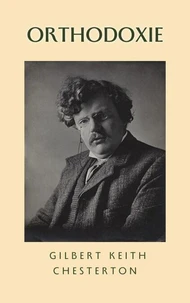
Orthodoxie
E-book
6,99 €

0,49 €

The New Jerusalem
E-book
0,49 €

What I saw in America
E-book
0,49 €

Tremendous Trifles
E-book
0,49 €

The Defendant
E-book
0,49 €

Tales of the Long Bow
E-book
0,49 €
Heretics
E-book
0,49 €
Varied Types
E-book
0,49 €
0,49 €

0,49 €

The Crimes of England
E-book
0,49 €
0,49 €