SOLDES
Jusqu'à -70% sur une sélection d'articles*

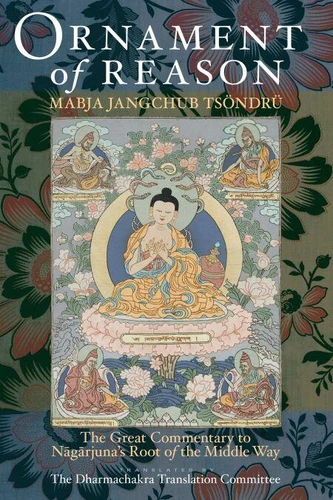
Ornament of Reason. The Great Commentary To Nagarjuna's Root Of The Middle Way
Par :Formats :
Disponible dans votre compte client Decitre ou Furet du Nord dès validation de votre commande. Le format ePub protégé est :
- Compatible avec une lecture sur My Vivlio (smartphone, tablette, ordinateur)
- Compatible avec une lecture sur liseuses Vivlio
- Pour les liseuses autres que Vivlio, vous devez utiliser le logiciel Adobe Digital Edition. Non compatible avec la lecture sur les liseuses Kindle, Remarkable et Sony
- Non compatible avec un achat hors France métropolitaine
 , qui est-ce ?
Notre partenaire de plateforme de lecture numérique où vous retrouverez l'ensemble de vos ebooks gratuitement
Pour en savoir plus sur nos ebooks, consultez notre aide en ligne ici
C'est si simple ! Lisez votre ebook avec l'app Vivlio sur votre tablette, mobile ou ordinateur :

- Nombre de pages612
- FormatePub
- ISBN978-1-55939-742-1
- EAN9781559397421
- Date de parution16/04/2011
- Protection num.Adobe DRM
- Taille6 Mo
- Infos supplémentairesepub
- ÉditeurSnow Lion
Résumé
In the Root of the Middle Way, Nagarjuna presents a magical method of reasoning, inviting everyone who encounters these lucid and fearless contemplations to follow him on a journey to the heart of transcendent insight. Inspired by the Buddha's teachings on profound emptiness in the Prajnaparamita Sutras, Nagarjuna sets out to probe what appears to be the most fundamental facts of the world, challenging us to question even our most deeply ingrained ideas and what seem to be self-evident facts.
In a series of unassuming and penetrating investigations, he asks basic questions such as: "What does it mean for something to occur? What is meant by 'going' or by 'coming'? Does the eye see? Does fire burn fuel? What is an example of being right? What does it mean to be wrong? Nagarjuna extends an invitation to open-minded and unprejudiced inquiry, and from his reader he asks for nothing more and nothing less than sincere and honest answers.
Yet where are our answers? Once we begin to follow Nagarjuna's clear and direct steps, the gateway to the inconceivable emerges-perhaps unexpectedly. The present work contains Nagarjuna's verses on the Middle Way accompanied by Mabja Jangchub Tsöndrü's famed commentary, the Ornament of Reason. Active in the twelfth century, Mabja was among the first Tibetans to rely on the works of the Indian master Candrakirti, and his account of the Middle Way exercised a deep and lasting influence on the development of Madhyamaka philosophy in all four schools of Buddhism in Tibet.
Sharp, concise, and yet comprehensive, the Ornament of Reason has been cherished by generations of scholar-practitioners. The late Khunu Lama Tenzin Gyaltsen Rinpoche, a renowned authority on the subject, often referred to this commentary as "the best there is." A visual outline of the commentary has been added that clearly shows the structure of each chapter and makes the arguments easier to follow.
In a series of unassuming and penetrating investigations, he asks basic questions such as: "What does it mean for something to occur? What is meant by 'going' or by 'coming'? Does the eye see? Does fire burn fuel? What is an example of being right? What does it mean to be wrong? Nagarjuna extends an invitation to open-minded and unprejudiced inquiry, and from his reader he asks for nothing more and nothing less than sincere and honest answers.
Yet where are our answers? Once we begin to follow Nagarjuna's clear and direct steps, the gateway to the inconceivable emerges-perhaps unexpectedly. The present work contains Nagarjuna's verses on the Middle Way accompanied by Mabja Jangchub Tsöndrü's famed commentary, the Ornament of Reason. Active in the twelfth century, Mabja was among the first Tibetans to rely on the works of the Indian master Candrakirti, and his account of the Middle Way exercised a deep and lasting influence on the development of Madhyamaka philosophy in all four schools of Buddhism in Tibet.
Sharp, concise, and yet comprehensive, the Ornament of Reason has been cherished by generations of scholar-practitioners. The late Khunu Lama Tenzin Gyaltsen Rinpoche, a renowned authority on the subject, often referred to this commentary as "the best there is." A visual outline of the commentary has been added that clearly shows the structure of each chapter and makes the arguments easier to follow.