SOLDES
Jusqu'à -70% sur une sélection d'articles*

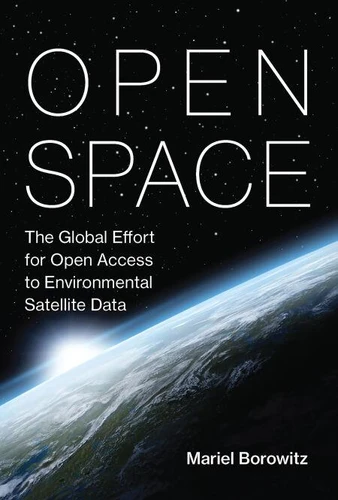
Open Space. The Global Effort for Open Access to Environmental Satellite Data
Par :Formats :
Disponible dans votre compte client Decitre ou Furet du Nord dès validation de votre commande. Le format ePub protégé est :
- Compatible avec une lecture sur My Vivlio (smartphone, tablette, ordinateur)
- Compatible avec une lecture sur liseuses Vivlio
- Pour les liseuses autres que Vivlio, vous devez utiliser le logiciel Adobe Digital Edition. Non compatible avec la lecture sur les liseuses Kindle, Remarkable et Sony
- Non compatible avec un achat hors France métropolitaine
 , qui est-ce ?
Notre partenaire de plateforme de lecture numérique où vous retrouverez l'ensemble de vos ebooks gratuitement
Pour en savoir plus sur nos ebooks, consultez notre aide en ligne ici
C'est si simple ! Lisez votre ebook avec l'app Vivlio sur votre tablette, mobile ou ordinateur :

- Nombre de pages432
- FormatePub
- ISBN978-0-262-34382-4
- EAN9780262343824
- Date de parution15/12/2017
- Protection num.Adobe DRM
- Taille838 Ko
- Infos supplémentairesepub
- ÉditeurThe MIT Press
Résumé
An examination of environmental satellite data sharing policies, offering a model of data-sharing policy development, case and practical recommendations for increasing global data sharing. Key to understanding and addressing climate change is continuous and precise monitoring of environmental conditions. Satellites play an important role in collecting climate data, offering comprehensive global coverage that can't be matched by in situ observation.
And yet, as Mariel Borowitz shows in this book, much satellite data is not freely available but restricted; this remains true despite the data-sharing advocacy of international organizations and a global open data movement. Borowitz examines policies governing the sharing of environmental satellite data, offering a model of data-sharing policy development and applying it in case studies from the United States, Europe, and Japan-countries responsible for nearly half of the unclassified government Earth observation satellites.
Borowitz develops a model that centers on the government agency as the primary actor while taking into account the roles of such outside actors as other government officials and non-governmental actors, as well as the economic, security, and normative attributes of the data itself. The case studies include the U. S. National Aeronautics and Space Administration (NASA) and the U. S. National Oceanographic and Atmospheric Association (NOAA), and the United States Geological Survey (USGS); the European Space Agency (ESA) and the European Organization for the Exploitation of Meteorological Satellites (EUMETSAT); and the Japanese Aerospace Exploration Agency (JAXA) and the Japanese Meteorological Agency (JMA).
Finally, she considers the policy implications of her findings for the future and provides recommendations on how to increase global sharing of satellite data.
And yet, as Mariel Borowitz shows in this book, much satellite data is not freely available but restricted; this remains true despite the data-sharing advocacy of international organizations and a global open data movement. Borowitz examines policies governing the sharing of environmental satellite data, offering a model of data-sharing policy development and applying it in case studies from the United States, Europe, and Japan-countries responsible for nearly half of the unclassified government Earth observation satellites.
Borowitz develops a model that centers on the government agency as the primary actor while taking into account the roles of such outside actors as other government officials and non-governmental actors, as well as the economic, security, and normative attributes of the data itself. The case studies include the U. S. National Aeronautics and Space Administration (NASA) and the U. S. National Oceanographic and Atmospheric Association (NOAA), and the United States Geological Survey (USGS); the European Space Agency (ESA) and the European Organization for the Exploitation of Meteorological Satellites (EUMETSAT); and the Japanese Aerospace Exploration Agency (JAXA) and the Japanese Meteorological Agency (JMA).
Finally, she considers the policy implications of her findings for the future and provides recommendations on how to increase global sharing of satellite data.