
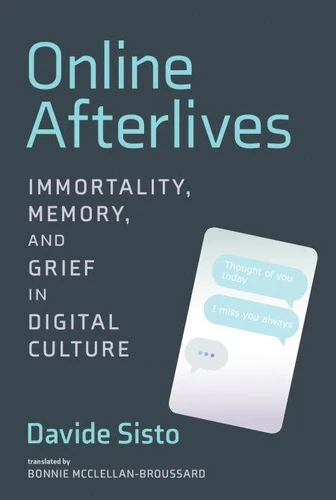
Online Afterlives. Immortality, Memory, and Grief in Digital Culture
Par : ,Formats :
Disponible dans votre compte client Decitre ou Furet du Nord dès validation de votre commande. Le format ePub protégé est :
- Compatible avec une lecture sur My Vivlio (smartphone, tablette, ordinateur)
- Compatible avec une lecture sur liseuses Vivlio
- Pour les liseuses autres que Vivlio, vous devez utiliser le logiciel Adobe Digital Edition. Non compatible avec la lecture sur les liseuses Kindle, Remarkable et Sony
- Non compatible avec un achat hors France métropolitaine
 , qui est-ce ?
Notre partenaire de plateforme de lecture numérique où vous retrouverez l'ensemble de vos ebooks gratuitement
Pour en savoir plus sur nos ebooks, consultez notre aide en ligne ici
C'est si simple ! Lisez votre ebook avec l'app Vivlio sur votre tablette, mobile ou ordinateur :

- Nombre de pages216
- FormatePub
- ISBN978-0-262-36048-7
- EAN9780262360487
- Date de parution01/09/2020
- Protection num.Adobe DRM
- Taille203 Ko
- Infos supplémentairesepub
- ÉditeurThe MIT Press
Résumé
How digital technology--from Facebook tributes to QR codes on headstones--is changing our relationship to death. Facebook is the biggest cemetery in the world, with countless acres of cyberspace occupied by snapshots, videos, thoughts, and memories of people who have shared their last status updates. Modern society usually hides death from sight, as if it were a character flaw and not an ineluctable fact.
But on Facebook and elsewhere on the internet, we can't avoid death; digital ghosts--electronic traces of the dead--appear at our click or touch. On the Internet at least, death has once again become a topic for public discourse. In Online Afterlives, Davide Sisto considers how digital technology is changing our relationship to death.
But on Facebook and elsewhere on the internet, we can't avoid death; digital ghosts--electronic traces of the dead--appear at our click or touch. On the Internet at least, death has once again become a topic for public discourse. In Online Afterlives, Davide Sisto considers how digital technology is changing our relationship to death.