
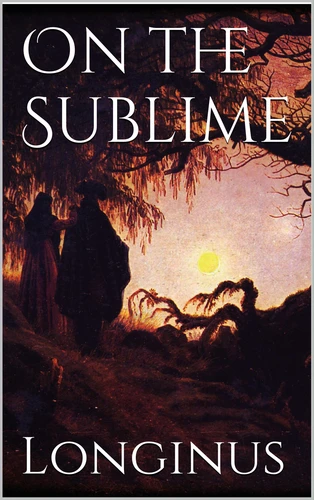
On the Sublime
Par :Formats :
Disponible dans votre compte client Decitre ou Furet du Nord dès validation de votre commande. Le format ePub est :
- Compatible avec une lecture sur My Vivlio (smartphone, tablette, ordinateur)
- Compatible avec une lecture sur liseuses Vivlio
- Pour les liseuses autres que Vivlio, vous devez utiliser le logiciel Adobe Digital Edition. Non compatible avec la lecture sur les liseuses Kindle, Remarkable et Sony
 , qui est-ce ?
Notre partenaire de plateforme de lecture numérique où vous retrouverez l'ensemble de vos ebooks gratuitement
Pour en savoir plus sur nos ebooks, consultez notre aide en ligne ici
C'est si simple ! Lisez votre ebook avec l'app Vivlio sur votre tablette, mobile ou ordinateur :

- Nombre de pages134
- FormatePub
- ISBN978-3-7481-1074-3
- EAN9783748110743
- Date de parution05/10/2018
- Protection num.Digital Watermarking
- Taille3 Mo
- Infos supplémentairesepub
- ÉditeurBooks on Demand
Résumé
The word "style" has become a weariness to think upon; so much is said, so much is printed about the art of expression, about methods, tricks, and turns; so many people, without any long experience, set up to be judges of style, on the strength of having admired two or three modern and often rather fantastic writers. About our author, however, we know that his experience has been long, and of the best, that he does not speak from a hasty acquaintance with a few contemporary précieux and précieuses.
The bad writing of his time he traces, as much of our own may be traced, to "the pursuit of novelty in thought, " or rather in expression. "It is this that has turned the brain of nearly all our learned world today." "Gardons nous d'écrire trop bien, " he might have said, "c'est la pire manière qu'il y'ait d'écrire."I.5 The Sublime, with which he concerns himself, is "a certain loftiness and excellence of language, " which "takes the reader out of himself...
The Sublime, acting with an imperious and irresistible force, sways every reader whether he will or no." In its own sphere the Sublime does what "natural magic" does in the poetical rendering of nature, and perhaps in the same scarcely-to-be-analysed fashion. Whether this art can be taught or not is a question which the author treats with modesty. Then, as now, people were denying (and not unjustly) that this art can be taught by rule.
The author does not go so far as to say that Criticism, "unlike Justice, does little evil, and little good; that is, if to entertain for a moment delicate and curious minds is to do little good." He does not rate his business so low as that. He admits that the inspiration comes from genius, from nature. But "an author can only learn from art when he is to abandon himself to the direction of his genius."
The bad writing of his time he traces, as much of our own may be traced, to "the pursuit of novelty in thought, " or rather in expression. "It is this that has turned the brain of nearly all our learned world today." "Gardons nous d'écrire trop bien, " he might have said, "c'est la pire manière qu'il y'ait d'écrire."I.5 The Sublime, with which he concerns himself, is "a certain loftiness and excellence of language, " which "takes the reader out of himself...
The Sublime, acting with an imperious and irresistible force, sways every reader whether he will or no." In its own sphere the Sublime does what "natural magic" does in the poetical rendering of nature, and perhaps in the same scarcely-to-be-analysed fashion. Whether this art can be taught or not is a question which the author treats with modesty. Then, as now, people were denying (and not unjustly) that this art can be taught by rule.
The author does not go so far as to say that Criticism, "unlike Justice, does little evil, and little good; that is, if to entertain for a moment delicate and curious minds is to do little good." He does not rate his business so low as that. He admits that the inspiration comes from genius, from nature. But "an author can only learn from art when he is to abandon himself to the direction of his genius."