
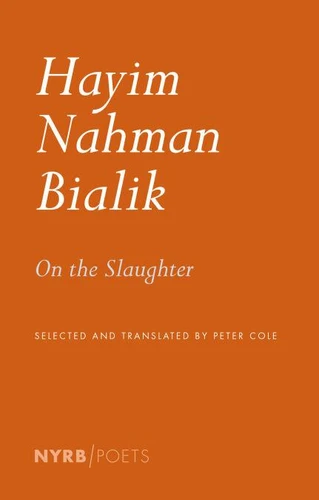
On the Slaughter
Par : ,Formats :
Disponible dans votre compte client Decitre ou Furet du Nord dès validation de votre commande. Le format ePub protégé est :
- Compatible avec une lecture sur My Vivlio (smartphone, tablette, ordinateur)
- Compatible avec une lecture sur liseuses Vivlio
- Pour les liseuses autres que Vivlio, vous devez utiliser le logiciel Adobe Digital Edition. Non compatible avec la lecture sur les liseuses Kindle, Remarkable et Sony
- Non compatible avec un achat hors France métropolitaine
 , qui est-ce ?
Notre partenaire de plateforme de lecture numérique où vous retrouverez l'ensemble de vos ebooks gratuitement
Pour en savoir plus sur nos ebooks, consultez notre aide en ligne ici
C'est si simple ! Lisez votre ebook avec l'app Vivlio sur votre tablette, mobile ou ordinateur :

- Nombre de pages152
- FormatePub
- ISBN8896230021
- EAN9798896230021
- Date de parution14/10/2025
- Protection num.Adobe DRM
- Taille1 Mo
- Infos supplémentairesepub
- ÉditeurNYRB Poets
Résumé
The first comprehensive English translation of a Russian-Jewish master's poetry, from the fiery poems he wrote in the wake of the pogroms of the early 20th century to his sublime lyrics about longing and self-reflection. On the Slaughter, named for Bialik's most famous poem, also includes a sample of the poet's work for children and an impassioned introduction by the collection's translator, MacArthur winner Peter Cole.
Few poets in the history of Hebrew have possessed the power and prescience of Hayim Nahman Bialik. Born in 1873 in a small Ukrainian village, he spent his most productive years in Odessa and in his fifties made his way to British Mandatory Palestine. He died in Vienna in 1934. Bialik's body of work opened a path from the traditional Jewish world of Eastern Europe into a more expansive Jewish humanism.
In a line that stretches back to the Bible and the Hebrew poetry of Muslim and Christian Spain, he stands out-in the words of Maxim Gorky-as "a modern Isaiah." To this day he remains an iconic and shockingly relevant poet, essayist, and tutelary spirit. Translated and introduced by MacArthur-winning poet Peter Cole, On the Slaughter presents Bialik for the first time in English as a masterful artist, someone far more politically and psychologically unsettling than his reputation as the national poet of the Jewish people might suggest.
This compact collection offers readers a panoramic view of Bialik's inner and outer landscapes: his visionary "poems of wrath" respond in startling fashion to the devastations of pogroms and a Jewish community in crisis, while his quietly sublime lyrics of longing, doubt, and withering self-assessment bring us into the silence at the heart of his art. The volume also includes a sampling of slyly sophisticated verse for children, and a moving introduction that bridges Bialik's moment and our own.
Few poets in the history of Hebrew have possessed the power and prescience of Hayim Nahman Bialik. Born in 1873 in a small Ukrainian village, he spent his most productive years in Odessa and in his fifties made his way to British Mandatory Palestine. He died in Vienna in 1934. Bialik's body of work opened a path from the traditional Jewish world of Eastern Europe into a more expansive Jewish humanism.
In a line that stretches back to the Bible and the Hebrew poetry of Muslim and Christian Spain, he stands out-in the words of Maxim Gorky-as "a modern Isaiah." To this day he remains an iconic and shockingly relevant poet, essayist, and tutelary spirit. Translated and introduced by MacArthur-winning poet Peter Cole, On the Slaughter presents Bialik for the first time in English as a masterful artist, someone far more politically and psychologically unsettling than his reputation as the national poet of the Jewish people might suggest.
This compact collection offers readers a panoramic view of Bialik's inner and outer landscapes: his visionary "poems of wrath" respond in startling fashion to the devastations of pogroms and a Jewish community in crisis, while his quietly sublime lyrics of longing, doubt, and withering self-assessment bring us into the silence at the heart of his art. The volume also includes a sampling of slyly sophisticated verse for children, and a moving introduction that bridges Bialik's moment and our own.