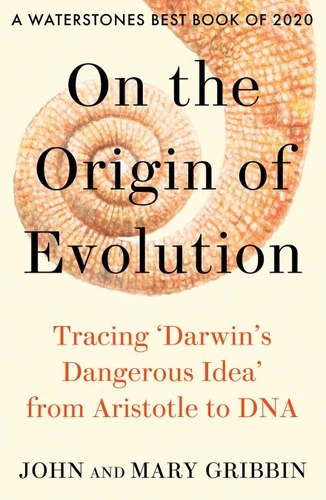
On the Origin of Evolution. Tracing 'Darwin's Dangerous Idea' from Aristotle to DNA
Par : ,Formats :
Disponible dans votre compte client Decitre ou Furet du Nord dès validation de votre commande. Le format ePub protégé est :
- Compatible avec une lecture sur My Vivlio (smartphone, tablette, ordinateur)
- Compatible avec une lecture sur liseuses Vivlio
- Pour les liseuses autres que Vivlio, vous devez utiliser le logiciel Adobe Digital Edition. Non compatible avec la lecture sur les liseuses Kindle, Remarkable et Sony
- Non compatible avec un achat hors France métropolitaine
 , qui est-ce ?
Notre partenaire de plateforme de lecture numérique où vous retrouverez l'ensemble de vos ebooks gratuitement
Pour en savoir plus sur nos ebooks, consultez notre aide en ligne ici
C'est si simple ! Lisez votre ebook avec l'app Vivlio sur votre tablette, mobile ou ordinateur :

- Nombre de pages320
- FormatePub
- ISBN978-0-00-833338-6
- EAN9780008333386
- Date de parution12/11/2020
- Protection num.Adobe DRM
- Infos supplémentairesepub
- ÉditeurWilliam Collins
Résumé
A Waterstones Best Book of 2020
The theory of evolution by natural selection did not spring fully formed and unprecedented from the brain of Charles Darwin. Rather it has been examined and debated by philosophers the world over for thousands of years.
This lively history traces the evolution of the idea of evolution, showing how it has changed and been changed by different societies over time.
It will put 'Darwin's Dangerous Idea' into its proper context, showing how it built on what went before and how it was developed in the twentieth century, through an understanding of genetics and the biochemical basis evolution. None of this diminishes the achievement of Darwin himself in perceiving the way evolution works at the level of individuals and species, but his contribution was one link in a chain that extends back into antiquity, and is still being forged today.
It will put 'Darwin's Dangerous Idea' into its proper context, showing how it built on what went before and how it was developed in the twentieth century, through an understanding of genetics and the biochemical basis evolution. None of this diminishes the achievement of Darwin himself in perceiving the way evolution works at the level of individuals and species, but his contribution was one link in a chain that extends back into antiquity, and is still being forged today.
A propos de John Gribbin
9,49 €
9,49 €