SOLDES
Jusqu'à -70% sur une sélection d'articles*

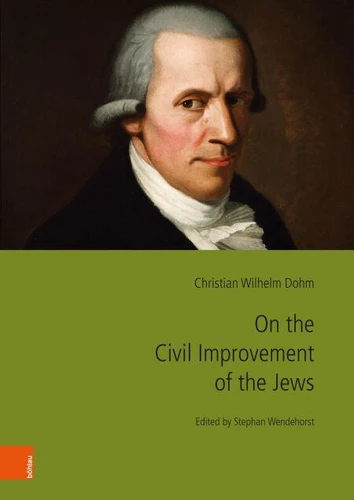
On the Civil Improvement of the Jews
Par : ,Formats :
Disponible dans votre compte client Decitre ou Furet du Nord dès validation de votre commande. Le format PDF est :
- Compatible avec une lecture sur My Vivlio (smartphone, tablette, ordinateur)
- Compatible avec une lecture sur liseuses Vivlio
- Pour les liseuses autres que Vivlio, vous devez utiliser le logiciel Adobe Digital Edition. Non compatible avec la lecture sur les liseuses Kindle, Remarkable et Sony
 , qui est-ce ?
Notre partenaire de plateforme de lecture numérique où vous retrouverez l'ensemble de vos ebooks gratuitement
Pour en savoir plus sur nos ebooks, consultez notre aide en ligne ici
C'est si simple ! Lisez votre ebook avec l'app Vivlio sur votre tablette, mobile ou ordinateur :

- Nombre de pages132
- FormatPDF
- ISBN978-3-205-22203-3
- EAN9783205222033
- Date de parution08/12/2025
- Protection num.pas de protection
- Taille2 Mo
- Infos supplémentairespdf
- ÉditeurBöhlau
Résumé
This volume is the first complete translation of Christian Wilhelm Dohm's treatise on the Civil Improvement of the Jews. It provides a novel access to a classic of the emancipation debate by placing it not only in the context of the Enlightenment, but also of the Holy Roman Empire as a mixed jurisdiction.
Christian Wilhelm Dohm's treatise on the Civil Improvement of the Jews, published in 1781, is arguably the most important treatise on the emancipation of the Jews.
This volume is the first complete translation - with the help of students of the Law Faculty of the University of Vienna - of this classic of the emancipation debate from the original German and French into English. It provides a novel access to the emancipation debate by placing Dohm and his work not only in the context of the Enlightenment, but also of the Holy Roman Empire of the German nation as a mixed jurisdiction.
It thus provides new interpretations of Dohm's arguments, which hitherto have remained enigmatic or simply been overlooked.
This volume is the first complete translation - with the help of students of the Law Faculty of the University of Vienna - of this classic of the emancipation debate from the original German and French into English. It provides a novel access to the emancipation debate by placing Dohm and his work not only in the context of the Enlightenment, but also of the Holy Roman Empire of the German nation as a mixed jurisdiction.
It thus provides new interpretations of Dohm's arguments, which hitherto have remained enigmatic or simply been overlooked.