SOLDES
Jusqu'à -70% sur une sélection d'articles*

Nouveauté
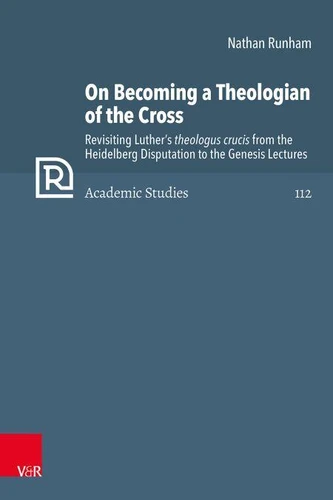
On Becoming a Theologian of the Cross. Revisiting Luther's theologus crucis from the Heidelberg Disputation to the Genesis Lectures
Par : , , , ,Formats :
Disponible dans votre compte client Decitre ou Furet du Nord dès validation de votre commande. Le format PDF est :
- Compatible avec une lecture sur My Vivlio (smartphone, tablette, ordinateur)
- Compatible avec une lecture sur liseuses Vivlio
- Pour les liseuses autres que Vivlio, vous devez utiliser le logiciel Adobe Digital Edition. Non compatible avec la lecture sur les liseuses Kindle, Remarkable et Sony
 , qui est-ce ?
Notre partenaire de plateforme de lecture numérique où vous retrouverez l'ensemble de vos ebooks gratuitement
Pour en savoir plus sur nos ebooks, consultez notre aide en ligne ici
C'est si simple ! Lisez votre ebook avec l'app Vivlio sur votre tablette, mobile ou ordinateur :

- Nombre de pages283
- FormatPDF
- ISBN978-3-647-50257-1
- EAN9783647502571
- Date de parution11/05/2026
- Protection num.pas de protection
- Taille4 Mo
- Infos supplémentairespdf
- ÉditeurVandenhoeck & Ruprecht
Résumé
Martin Luther's theology of the cross is often (mis)used to support social gospels and liberation theology. Yet Luther's intent was not to make a god more sympathetic to us or a god more like us, but that - through the recovery of the gospel (that had been lost and tainted by the fallen wisdom of man) - in the cross we might find the only sympathetic God who really liberates us from our sin. In his theology of the cross, Luther points out that the cross requires an understanding of revelation and redemption which leads us to despair of all our own righteousness, ability and wisdom, and encourages us to trust in the only one who can save us and was crucified in our place.
In this work Nathan Runham indentifies Luther's real intent behind the theologian of the cross.
His intent was to recover a biblical understanding of revelation which, in turn, enables us to understand the biblical gospel of redemption. But Runham also demonstrates that Luther had understood the gospel prior to the Heidelberg Disputation (HD) meaning that those who dismiss the HD as pre-reformational will need to reckon with the fact that Luther evidently had had his 'evangelical conversion' prior to engaging in debate with his Augustinian colleagues in 1518.
His intent was to recover a biblical understanding of revelation which, in turn, enables us to understand the biblical gospel of redemption. But Runham also demonstrates that Luther had understood the gospel prior to the Heidelberg Disputation (HD) meaning that those who dismiss the HD as pre-reformational will need to reckon with the fact that Luther evidently had had his 'evangelical conversion' prior to engaging in debate with his Augustinian colleagues in 1518.