SOLDES
Jusqu'à -70% sur une sélection d'articles*
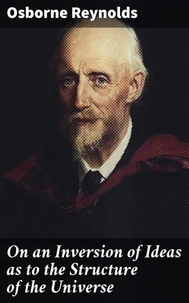
On an Inversion of Ideas as to the Structure of the Universe
Par :Formats :
Disponible dans votre compte client Decitre ou Furet du Nord dès validation de votre commande. Le format ePub est :
- Compatible avec une lecture sur My Vivlio (smartphone, tablette, ordinateur)
- Compatible avec une lecture sur liseuses Vivlio
- Pour les liseuses autres que Vivlio, vous devez utiliser le logiciel Adobe Digital Edition. Non compatible avec la lecture sur les liseuses Kindle, Remarkable et Sony
 , qui est-ce ?
Notre partenaire de plateforme de lecture numérique où vous retrouverez l'ensemble de vos ebooks gratuitement
Pour en savoir plus sur nos ebooks, consultez notre aide en ligne ici
C'est si simple ! Lisez votre ebook avec l'app Vivlio sur votre tablette, mobile ou ordinateur :

- Nombre de pages25
- FormatePub
- ISBN859-65--4708754-0
- EAN8596547087540
- Date de parution20/07/2022
- Protection num.Digital Watermarking
- Taille1 Mo
- Infos supplémentairesepub
- ÉditeurDIGICAT
Résumé
In "On an Inversion of Ideas as to the Structure of the Universe, " Osborne Reynolds presents a groundbreaking examination of the prevailing cosmological paradigms of his time. Blending rigorous scientific inquiry with philosophical exploration, Reynolds challenges conventional assumptions surrounding the universe's structure. His literary style is marked by clarity and precision, seamlessly integrating theoretical discussions with empirical observations, placing this work within the broader context of 19th-century scientific revolution, where such inquiries were pivotal to the development of modern physics and astronomy.
Osborne Reynolds, a noted engineer and physicist, was deeply influenced by the advances in fluid dynamics and thermodynamics during his career. His expertise in experimental methods and theoretical modeling emerged from a scientific milieu that prioritized empirical validation, which is evident in his meticulous approach to constructing and deconstructing complex ideas. Reynolds' interdisciplinary background-bridging engineering, physics, and philosophy-was crucial in shaping the innovative perspectives he brings to this work, reflecting a desire to reconcile scientific thought with metaphysical inquiry.
I highly recommend this book to both scholars and enthusiasts of cosmology and philosophy of science. Reynolds' thoughtful provocation invites readers to reconsider their understanding of the universe's architecture, stimulating deeper reflection on the nature of reality itself. His insights continue to resonate in contemporary discussions within both scientific and philosophical circles.
Osborne Reynolds, a noted engineer and physicist, was deeply influenced by the advances in fluid dynamics and thermodynamics during his career. His expertise in experimental methods and theoretical modeling emerged from a scientific milieu that prioritized empirical validation, which is evident in his meticulous approach to constructing and deconstructing complex ideas. Reynolds' interdisciplinary background-bridging engineering, physics, and philosophy-was crucial in shaping the innovative perspectives he brings to this work, reflecting a desire to reconcile scientific thought with metaphysical inquiry.
I highly recommend this book to both scholars and enthusiasts of cosmology and philosophy of science. Reynolds' thoughtful provocation invites readers to reconsider their understanding of the universe's architecture, stimulating deeper reflection on the nature of reality itself. His insights continue to resonate in contemporary discussions within both scientific and philosophical circles.