SOLDES
Jusqu'à -70% sur une sélection d'articles*

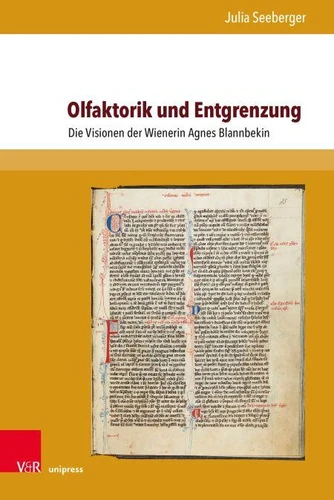
Olfaktorik und Entgrenzung. Die Visionen der Wienerin Agnes Blannbekin
Par :Formats :
Disponible dans votre compte client Decitre ou Furet du Nord dès validation de votre commande. Le format PDF est :
- Compatible avec une lecture sur My Vivlio (smartphone, tablette, ordinateur)
- Compatible avec une lecture sur liseuses Vivlio
- Pour les liseuses autres que Vivlio, vous devez utiliser le logiciel Adobe Digital Edition. Non compatible avec la lecture sur les liseuses Kindle, Remarkable et Sony
 , qui est-ce ?
Notre partenaire de plateforme de lecture numérique où vous retrouverez l'ensemble de vos ebooks gratuitement
Pour en savoir plus sur nos ebooks, consultez notre aide en ligne ici
C'est si simple ! Lisez votre ebook avec l'app Vivlio sur votre tablette, mobile ou ordinateur :

- Nombre de pages364
- FormatPDF
- ISBN978-3-8470-1409-6
- EAN9783847014096
- Date de parution11/04/2022
- Protection num.pas de protection
- Taille7 Mo
- Infos supplémentairespdf
- ÉditeurV&R Unipress
Résumé
Welche Rolle spielte Olfaktorik (Geruchssinn und Geruch) in der mittelalterlichen (Frauen-)Mystik? Am Beispiel der Niederschrift der Visionen von Agnes Blannbekin durch ihren Beichtvater sucht diese Studie nach einer Antwort. Eine Handschriften- und Kontextanalyse stellt erstmals alle bekannten Textzeugen und Editionen der Visionen zusammen, wobei sichtbar wird, wie fragil das Wissen über die Person der als Wiener Begine bekannten Agnes Blannbekin ist.
Die anschließende Untersuchung der Visionen verdeutlicht, dass dem Olfaktorischen im Vergleich zu anderen Sinnen eine herausgehobene Stellung zukommt. Die Verwendung von Olfaktorik ermöglicht eine narrative Entgrenzung in mehreren Bereichen, sie erlaubt der Protagonistin eine erweiterte Handlungspotentialität und stellt eine religiös-individualisierte Lebensform einer frommen, alleinlebenden Jungfrau an der Schwelle des 14.
Jahrhunderts vor. What role did olfaction, the sense of smell and scent, play in medieval (women's) mysticism? Using the example of the transcription of Agnes Blannbekin's visions by her confessor, this study seeks an answer. A manuscript and context analysis brings together for the first time all known textual witnesses and editions of the visions, revealing how fragile the knowledge about the person of Agnes Blannbekin, known as the Viennese Beguine, is.
The subsequent examination of the visions makes it clear that the olfactory has a prominent position compared to other senses. The use of olfaction enables a narrative softening of boundaries in several areas, it allows the protagonist an expanded potentiality for action and presents a religiously-individualised way of life to a pious virgin living alone on the threshold of the 14th century.
Die anschließende Untersuchung der Visionen verdeutlicht, dass dem Olfaktorischen im Vergleich zu anderen Sinnen eine herausgehobene Stellung zukommt. Die Verwendung von Olfaktorik ermöglicht eine narrative Entgrenzung in mehreren Bereichen, sie erlaubt der Protagonistin eine erweiterte Handlungspotentialität und stellt eine religiös-individualisierte Lebensform einer frommen, alleinlebenden Jungfrau an der Schwelle des 14.
Jahrhunderts vor. What role did olfaction, the sense of smell and scent, play in medieval (women's) mysticism? Using the example of the transcription of Agnes Blannbekin's visions by her confessor, this study seeks an answer. A manuscript and context analysis brings together for the first time all known textual witnesses and editions of the visions, revealing how fragile the knowledge about the person of Agnes Blannbekin, known as the Viennese Beguine, is.
The subsequent examination of the visions makes it clear that the olfactory has a prominent position compared to other senses. The use of olfaction enables a narrative softening of boundaries in several areas, it allows the protagonist an expanded potentiality for action and presents a religiously-individualised way of life to a pious virgin living alone on the threshold of the 14th century.