SOLDES
Jusqu'à -70% sur une sélection d'articles*

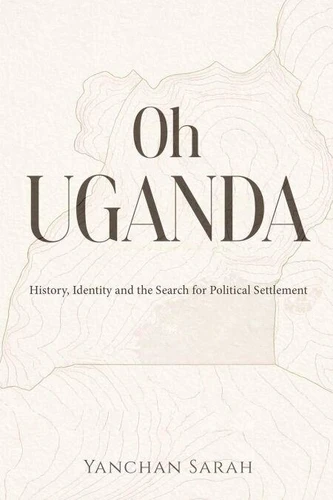
Oh Uganda
Par :Formats :
Disponible dans votre compte client Decitre ou Furet du Nord dès validation de votre commande. Le format ePub est :
- Compatible avec une lecture sur My Vivlio (smartphone, tablette, ordinateur)
- Compatible avec une lecture sur liseuses Vivlio
- Pour les liseuses autres que Vivlio, vous devez utiliser le logiciel Adobe Digital Edition. Non compatible avec la lecture sur les liseuses Kindle, Remarkable et Sony
 , qui est-ce ?
Notre partenaire de plateforme de lecture numérique où vous retrouverez l'ensemble de vos ebooks gratuitement
Pour en savoir plus sur nos ebooks, consultez notre aide en ligne ici
C'est si simple ! Lisez votre ebook avec l'app Vivlio sur votre tablette, mobile ou ordinateur :

- FormatePub
- ISBN978-1-0676307-2-0
- EAN9781067630720
- Date de parution21/04/2026
- Protection num.pas de protection
- Infos supplémentairesepub
- ÉditeurYS Press London
Résumé
Oh Uganda examines the foundations of Uganda's political formation beyond the conventional narrative of a unified nation-state. Long before colonial rule, the region was structured through diverse kingdoms, chiefdoms, and political systems, each operating under distinct forms of authority and governance. The imposition of colonial administration did not unify these systems, it layered over them, leaving unresolved tensions that continue to shape the modern state.
This work traces the evolution of Uganda's political structure from pre-colonial governance through colonial intervention and into post-independence constitutional development. It critically engages with key moments, including the debates surrounding the Odoki Commission, to explore the persistent search for a political settlement capable of accommodating Uganda's internal diversity. Rather than presenting a linear historical account, Oh Uganda interrogates the deeper structural challenges embedded within state formation, questions of identity, legitimacy, representation, and power. It examines how imported political frameworks have struggled to reconcile with indigenous systems, and why institutional reforms have often failed to address foundational imbalances.
Positioned within the broader context of post-colonial African governance, this book offers a reflective analysis of nation-building as an ongoing and incomplete process. It invites readers to reconsider the assumptions underpinning modern statehood and to engage critically with the political realities that continue to define Uganda's trajectory.
This work traces the evolution of Uganda's political structure from pre-colonial governance through colonial intervention and into post-independence constitutional development. It critically engages with key moments, including the debates surrounding the Odoki Commission, to explore the persistent search for a political settlement capable of accommodating Uganda's internal diversity. Rather than presenting a linear historical account, Oh Uganda interrogates the deeper structural challenges embedded within state formation, questions of identity, legitimacy, representation, and power. It examines how imported political frameworks have struggled to reconcile with indigenous systems, and why institutional reforms have often failed to address foundational imbalances.
Positioned within the broader context of post-colonial African governance, this book offers a reflective analysis of nation-building as an ongoing and incomplete process. It invites readers to reconsider the assumptions underpinning modern statehood and to engage critically with the political realities that continue to define Uganda's trajectory.