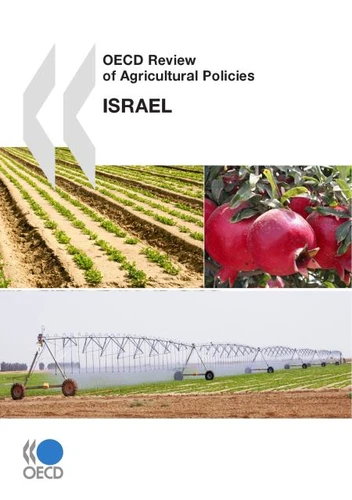
Israel's agriculture is unique amongst developed countries in that land and water resources are nearly all state-owned and that agricultural production is dominated by co-operative communities. Israel is a world leader in agricultural technology, particularly in farming in arid conditions. This Review measures support provided to Israeli agriculture and evaluates the effectiveness of current agricultural policy measures.
Israel has made progress in removing policies that distort trade, and resource allocation and support to agriculture is lower than the OECD average. However, the government still plays an important role. The report suggests further agricultural policy reforms to reduce costs for consumers and taxpayers and to improve the efficiency of current policy measures. A special focus of the report is the environmental performance of Israeli agriculture.
This is already an issue with scarce land and water resources, accentuated by the overarching issue of climate change. The Review examines agriculture's performance with respect to water resources and pollution, soils, biodiversity, air emissions and climate change. It concludes that strengthening policy coherence, especially in improving the management of water resources in agriculture, is important.
Israel's agriculture is unique amongst developed countries in that land and water resources are nearly all state-owned and that agricultural production is dominated by co-operative communities. Israel is a world leader in agricultural technology, particularly in farming in arid conditions. This Review measures support provided to Israeli agriculture and evaluates the effectiveness of current agricultural policy measures.
Israel has made progress in removing policies that distort trade, and resource allocation and support to agriculture is lower than the OECD average. However, the government still plays an important role. The report suggests further agricultural policy reforms to reduce costs for consumers and taxpayers and to improve the efficiency of current policy measures. A special focus of the report is the environmental performance of Israeli agriculture.
This is already an issue with scarce land and water resources, accentuated by the overarching issue of climate change. The Review examines agriculture's performance with respect to water resources and pollution, soils, biodiversity, air emissions and climate change. It concludes that strengthening policy coherence, especially in improving the management of water resources in agriculture, is important.


 , qui est-ce ?