
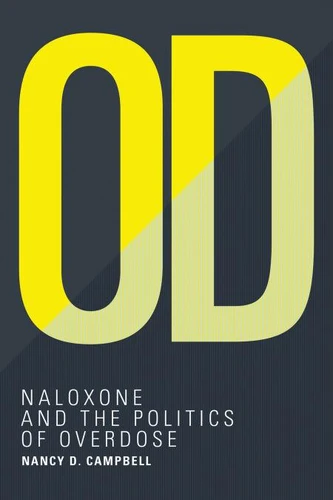
OD. Naloxone and the Politics of Overdose
Par :Formats :
Disponible dans votre compte client Decitre ou Furet du Nord dès validation de votre commande. Le format ePub protégé est :
- Compatible avec une lecture sur My Vivlio (smartphone, tablette, ordinateur)
- Compatible avec une lecture sur liseuses Vivlio
- Pour les liseuses autres que Vivlio, vous devez utiliser le logiciel Adobe Digital Edition. Non compatible avec la lecture sur les liseuses Kindle, Remarkable et Sony
- Non compatible avec un achat hors France métropolitaine
 , qui est-ce ?
Notre partenaire de plateforme de lecture numérique où vous retrouverez l'ensemble de vos ebooks gratuitement
Pour en savoir plus sur nos ebooks, consultez notre aide en ligne ici
C'est si simple ! Lisez votre ebook avec l'app Vivlio sur votre tablette, mobile ou ordinateur :

- Nombre de pages424
- FormatePub
- ISBN978-0-262-35748-7
- EAN9780262357487
- Date de parution03/03/2020
- Protection num.Adobe DRM
- Taille57 Mo
- Infos supplémentairesepub
- ÉditeurThe MIT Press
Résumé
The history of an unnatural disaster-drug overdose-and the emergence of naloxone as a social and technological solution. For years, drug overdose was unmentionable in polite society. OD was understood to be something that took place in dark alleys-an ugly death awaiting social deviants-neither scientifically nor clinically interesting. But over the last several years, overdose prevention has become the unlikely object of a social movement, powered by the miracle drug naloxone.
In OD, Nancy Campbell charts the emergence of naloxone as a technological fix for overdose and describes the remaking of overdose into an experience recognized as common, predictable, patterned-and, above all, preventable. Naloxone, which made resuscitation, rescue, and "reversal" after an overdose possible, became a tool for shifting law, policy, clinical medicine, and science toward harm reduction.
Liberated from emergency room protocols and distributed in take-home kits to non-medical professionals, it also became a tool of empowerment. After recounting the prehistory of naloxone-the early treatment of OD as a problem of poisoning, the development of nalorphine (naloxone's predecessor), the idea of "reanimatology"-Campbell describes how naloxone emerged as a tool of harm reduction. She reports on naloxone use in far-flung locations that include post-Thatcherite Britain, rural New Mexico, and cities and towns in Massachusetts.
Drawing on interviews with approximately sixty advocates, drug users, former users, friends, families, witnesses, clinicians, and scientists-whom she calls the "protagonists" of her story-Campbell tells a story of saving lives amid the complex, difficult conditions of an unfolding unnatural disaster.
In OD, Nancy Campbell charts the emergence of naloxone as a technological fix for overdose and describes the remaking of overdose into an experience recognized as common, predictable, patterned-and, above all, preventable. Naloxone, which made resuscitation, rescue, and "reversal" after an overdose possible, became a tool for shifting law, policy, clinical medicine, and science toward harm reduction.
Liberated from emergency room protocols and distributed in take-home kits to non-medical professionals, it also became a tool of empowerment. After recounting the prehistory of naloxone-the early treatment of OD as a problem of poisoning, the development of nalorphine (naloxone's predecessor), the idea of "reanimatology"-Campbell describes how naloxone emerged as a tool of harm reduction. She reports on naloxone use in far-flung locations that include post-Thatcherite Britain, rural New Mexico, and cities and towns in Massachusetts.
Drawing on interviews with approximately sixty advocates, drug users, former users, friends, families, witnesses, clinicians, and scientists-whom she calls the "protagonists" of her story-Campbell tells a story of saving lives amid the complex, difficult conditions of an unfolding unnatural disaster.