SOLDES
Jusqu'à -70% sur une sélection d'articles*

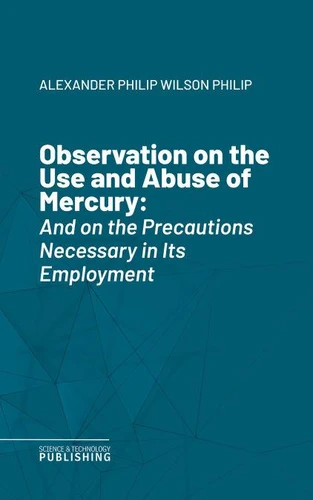
Observation on the Use and Abuse of Mercury. And on the Precautions Necessary in Its Employment
Par :Formats :
Disponible dans votre compte client Decitre ou Furet du Nord dès validation de votre commande. Le format ePub est :
- Compatible avec une lecture sur My Vivlio (smartphone, tablette, ordinateur)
- Compatible avec une lecture sur liseuses Vivlio
- Pour les liseuses autres que Vivlio, vous devez utiliser le logiciel Adobe Digital Edition. Non compatible avec la lecture sur les liseuses Kindle, Remarkable et Sony
 , qui est-ce ?
Notre partenaire de plateforme de lecture numérique où vous retrouverez l'ensemble de vos ebooks gratuitement
Pour en savoir plus sur nos ebooks, consultez notre aide en ligne ici
C'est si simple ! Lisez votre ebook avec l'app Vivlio sur votre tablette, mobile ou ordinateur :

- FormatePub
- ISBN978-2-5281-1976-1
- EAN9782528119761
- Date de parution01/09/2025
- Protection num.pas de protection
- Infos supplémentairesepub
- ÉditeurScience & Technology Publishing
Résumé
Observation on the Use and Abuse of Mercury And on the Precautions Necessary in Its Employment is a comprehensive medical treatise authored by Charles William Bell, first published in the early 19th century. The book delves deeply into the therapeutic applications and potential dangers of mercury, a substance widely used in medicine at the time, particularly for the treatment of syphilis and other chronic diseases.
Bell draws upon his extensive clinical experience to provide a critical analysis of the prevailing medical practices involving mercury, highlighting both its efficacy and the significant risks associated with its misuse. The text is structured to guide physicians and medical practitioners through the complexities of mercury administration, emphasizing the importance of careful dosage, patient monitoring, and individualized treatment plans.
Bell meticulously documents the symptoms of mercury poisoning, such as salivation, ulceration, and systemic toxicity, and offers practical advice on how to recognize early warning signs and mitigate adverse effects. He also discusses the physiological mechanisms by which mercury acts on the human body, referencing contemporary scientific theories and case studies to support his arguments. Throughout the book, Bell advocates for a more judicious and evidence-based approach to mercury therapy, warning against the dangers of over-reliance and indiscriminate use.
He stresses the necessity of balancing therapeutic benefits with potential harms, urging practitioners to consider alternative treatments when appropriate and to remain vigilant for complications. The work is notable for its blend of empirical observation, critical reasoning, and ethical concern for patient welfare. Observation on the Use and Abuse of Mercury stands as an important historical document, reflecting the evolving understanding of pharmacology and medical ethics in the 19th century.
It offers valuable insights into the challenges faced by physicians of the era and serves as a cautionary tale about the complexities of medical innovation and the enduring need for caution and compassion in clinical practice.
Bell draws upon his extensive clinical experience to provide a critical analysis of the prevailing medical practices involving mercury, highlighting both its efficacy and the significant risks associated with its misuse. The text is structured to guide physicians and medical practitioners through the complexities of mercury administration, emphasizing the importance of careful dosage, patient monitoring, and individualized treatment plans.
Bell meticulously documents the symptoms of mercury poisoning, such as salivation, ulceration, and systemic toxicity, and offers practical advice on how to recognize early warning signs and mitigate adverse effects. He also discusses the physiological mechanisms by which mercury acts on the human body, referencing contemporary scientific theories and case studies to support his arguments. Throughout the book, Bell advocates for a more judicious and evidence-based approach to mercury therapy, warning against the dangers of over-reliance and indiscriminate use.
He stresses the necessity of balancing therapeutic benefits with potential harms, urging practitioners to consider alternative treatments when appropriate and to remain vigilant for complications. The work is notable for its blend of empirical observation, critical reasoning, and ethical concern for patient welfare. Observation on the Use and Abuse of Mercury stands as an important historical document, reflecting the evolving understanding of pharmacology and medical ethics in the 19th century.
It offers valuable insights into the challenges faced by physicians of the era and serves as a cautionary tale about the complexities of medical innovation and the enduring need for caution and compassion in clinical practice.