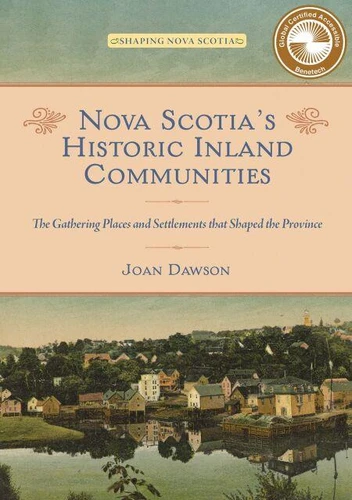
Nova Scotia’s Historic Inland Communities. The Gathering Places and Settlements that Shaped the Province
Par :Formats :
Disponible dans votre compte client Decitre ou Furet du Nord dès validation de votre commande. Le format ePub est :
- Compatible avec une lecture sur My Vivlio (smartphone, tablette, ordinateur)
- Compatible avec une lecture sur liseuses Vivlio
- Pour les liseuses autres que Vivlio, vous devez utiliser le logiciel Adobe Digital Edition. Non compatible avec la lecture sur les liseuses Kindle, Remarkable et Sony
 , qui est-ce ?
Notre partenaire de plateforme de lecture numérique où vous retrouverez l'ensemble de vos ebooks gratuitement
Pour en savoir plus sur nos ebooks, consultez notre aide en ligne ici
C'est si simple ! Lisez votre ebook avec l'app Vivlio sur votre tablette, mobile ou ordinateur :

- FormatePub
- ISBN978-1-77471-079-1
- EAN9781774710791
- Date de parution19/04/2022
- Protection num.Digital Watermarking
- Taille22 Mo
- Infos supplémentairesepub
- ÉditeurNimbus
Résumé
The story of Nova Scotia's inland communities begins with the Mi'kmaq, who established traditional gathering places in the heart of Mi'kma'ki. Through the eighteenth and nineteenth centuries, European settlers, British Loyalists, and former soldiers were among those who also took on the challenges of developing Nova Scotia's inland communities. Some places struggled to survive, but many thrived. Today, Nova Scotia's most successful communities live on because entrepreneurs have adapted to changing circumstances-and all of Nova Scotia's inland communities have stories to tell.
With the help of more than thirty historical photos, trusted historian Joan Dawson takes us through the stories of the many Indigenous, Acadian, European, and African Nova Scotian communities in inland Nova Scotia.
Nova Scotia's Historic Inland Communities also explores the rivers, roads, and railways that led to the development of those communities-and the industries that were central to their success.
Nova Scotia's Historic Inland Communities also explores the rivers, roads, and railways that led to the development of those communities-and the industries that were central to their success.