
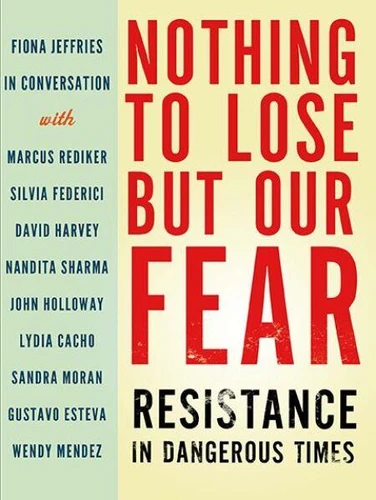
Nothing to Lose but Our Fear. Resistance in Dangerous Times
Par : , , , ,Formats :
Disponible dans votre compte client Decitre ou Furet du Nord dès validation de votre commande. Le format ePub est :
- Compatible avec une lecture sur My Vivlio (smartphone, tablette, ordinateur)
- Compatible avec une lecture sur liseuses Vivlio
- Pour les liseuses autres que Vivlio, vous devez utiliser le logiciel Adobe Digital Edition. Non compatible avec la lecture sur les liseuses Kindle, Remarkable et Sony
 , qui est-ce ?
Notre partenaire de plateforme de lecture numérique où vous retrouverez l'ensemble de vos ebooks gratuitement
Pour en savoir plus sur nos ebooks, consultez notre aide en ligne ici
C'est si simple ! Lisez votre ebook avec l'app Vivlio sur votre tablette, mobile ou ordinateur :

- Nombre de pages208
- FormatePub
- ISBN978-1-77113-171-1
- EAN9781771131711
- Date de parution15/03/2015
- Protection num.Digital Watermarking
- Taille748 Ko
- Infos supplémentairesepub
- ÉditeurBetween the Lines
Résumé
As the Egyptian revolution gained momentum in the winter of 2011, a common refrain echoed across Cairo's Tahrir Square: "The wall of fear came down!" Mass protests against fear and authoritarianism have also rumbled across the aggrieved streets and plazas of Tunis, Athens, Madrid, New York City, Istanbul, Rio de Janeiro, Mexico City, Delhi, and beyond. While the scale of these new uprisings may be unprecedented, the refusal of fear is not unique to our time.
Nothing to Lose but Our Fear brings together an international group of scholars and activists and asks them how can we think critically and act productively in a world awash in fear. Their conversations with Fiona Jeffries provoke consideration of the often hidden histories of people's emancipatory practices and offer reflections that can help us understand the conjuncture of systemic fear and resistance.
Nothing to Lose but Our Fear brings together an international group of scholars and activists and asks them how can we think critically and act productively in a world awash in fear. Their conversations with Fiona Jeffries provoke consideration of the often hidden histories of people's emancipatory practices and offer reflections that can help us understand the conjuncture of systemic fear and resistance.