SOLDES
Jusqu'à -70% sur une sélection d'articles*

Nouveauté
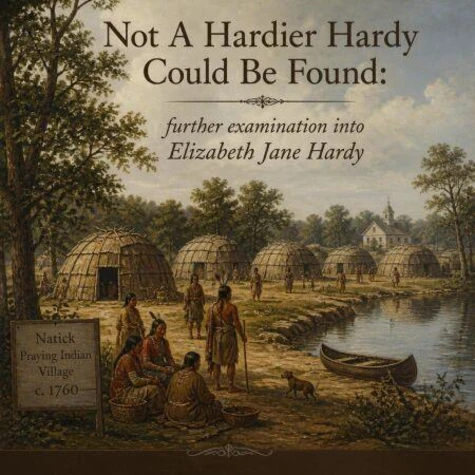
Not A Hardier Hardy Could Be Found: further examination into Elizabeth Jane Hardy. Hardy Genealogy
Par :Formats :
Disponible dans votre compte client Decitre ou Furet du Nord dès validation de votre commande. Le format ePub est :
- Compatible avec une lecture sur My Vivlio (smartphone, tablette, ordinateur)
- Compatible avec une lecture sur liseuses Vivlio
- Pour les liseuses autres que Vivlio, vous devez utiliser le logiciel Adobe Digital Edition. Non compatible avec la lecture sur les liseuses Kindle, Remarkable et Sony
 , qui est-ce ?
Notre partenaire de plateforme de lecture numérique où vous retrouverez l'ensemble de vos ebooks gratuitement
Pour en savoir plus sur nos ebooks, consultez notre aide en ligne ici
C'est si simple ! Lisez votre ebook avec l'app Vivlio sur votre tablette, mobile ou ordinateur :

- FormatePub
- ISBN8235511262
- EAN9798235511262
- Date de parution15/06/2026
- Protection num.pas de protection
- Infos supplémentairesepub
- ÉditeurIoakim Ioakim
Résumé
David Hardy the younger had an older brother named David. Why was this? The answer comes in yet another adoption in the family proven by official records. David the younger was adopted from the Natick Praying Indians Community. This book tells the story of how this was discovered and also into other stories of Elizabeth Hardy's heritage. A Gathering Point: Natick served as a sanctuary and hub for Indigenous individuals from various clans and families who had been displaced by European expansion, epidemics, and war.
While there were core founding families from the Massachusett and Nipmuc nations (such as the Speen and Pegan families), the population was diverse. "Natick Indians" as a Collective Identity: Because of this mixing, residents of the town were frequently referred to collectively as "Natick Indians" rather than by their specific original tribal affiliations. This collective identity emerged as these groups lived, worshipped, and intermarried within the town's boundaries.
Fluctuating Composition: The population fluctuated over the town's history (often between 40 and 150 residents), and this fluidity meant that the specific ancestral makeup of an individual in the mid-1700s-when a child might have been taken in or integrated into a family like the Hardys-could very well reflect a mixture of these neighboring Algonquian-speaking groups.
While there were core founding families from the Massachusett and Nipmuc nations (such as the Speen and Pegan families), the population was diverse. "Natick Indians" as a Collective Identity: Because of this mixing, residents of the town were frequently referred to collectively as "Natick Indians" rather than by their specific original tribal affiliations. This collective identity emerged as these groups lived, worshipped, and intermarried within the town's boundaries.
Fluctuating Composition: The population fluctuated over the town's history (often between 40 and 150 residents), and this fluidity meant that the specific ancestral makeup of an individual in the mid-1700s-when a child might have been taken in or integrated into a family like the Hardys-could very well reflect a mixture of these neighboring Algonquian-speaking groups.