

Not a Disease. Rethinking Addiction in the Heart of America's Overdose Crisis
Par :Formats :
Disponible dans votre compte client Decitre ou Furet du Nord dès validation de votre commande. Le format ePub protégé est :
- Compatible avec une lecture sur My Vivlio (smartphone, tablette, ordinateur)
- Compatible avec une lecture sur liseuses Vivlio
- Pour les liseuses autres que Vivlio, vous devez utiliser le logiciel Adobe Digital Edition. Non compatible avec la lecture sur les liseuses Kindle, Remarkable et Sony
- Non compatible avec un achat hors France métropolitaine
 , qui est-ce ?
Notre partenaire de plateforme de lecture numérique où vous retrouverez l'ensemble de vos ebooks gratuitement
Pour en savoir plus sur nos ebooks, consultez notre aide en ligne ici
C'est si simple ! Lisez votre ebook avec l'app Vivlio sur votre tablette, mobile ou ordinateur :

- Nombre de pages304
- Date de parution05/01/2027
- FormatePub
- ISBN978-0-262-05805-6
- EAN9780262058056
- Protection num.Adobe DRM
- Infos supplémentairesepub
- ÉditeurThe MIT Press
Résumé
A bracing-and compassionate-challenge to the idea of addiction as a disease. From a leading psychiatrist at the Yale School of Medicine and the medical director of a methadone clinic in Washington, DC. Ask someone why they got a brain tumor. They won't know. But ask someone why they developed an addiction and they'll have a personal, meaningful explanation. Why? Because, Sally Satel argues, unlike a brain tumor, addiction is not a disease, and, in particular, not a brain disease.
Dismantling the conventional framing of addiction, Not a Disease makes a compelling case for more refined-and useful-conceptual and clinical perspectives. Addiction, Satel suggests, is better understood as a symptom rather than a disease-a symptom of psychic pain that needs to be anesthetized. Only by recognizing this will we find a more effective approach to recovery. A practicing physician who has worked with addicts for many years, Satel explores why people consume substances to excess, and why conflicting ideas-held by physicians, scientists, policymakers, and the public-complicate treatment and policy.
Without dismissing biological factors, she looks at the drug epidemic in Ironton, Ohio, a small American town in decline, breaking down the conventional wisdom that ascribes too much power to the capacity of drugs to enslave users' brains, and too little to the vulnerabilities of people and places that draw them to drugs in the first place. Her analysis of the misguided responses to the crisis of addiction to prescription opioids illuminates the plight of millions of patients plunged into needless and solitary agony.
Boldly recasting the nature of addiction, from painkillers to fentanyl, Not a Disease holds out hope for a more humane way to meet this deep and widespread societal challenge.
Dismantling the conventional framing of addiction, Not a Disease makes a compelling case for more refined-and useful-conceptual and clinical perspectives. Addiction, Satel suggests, is better understood as a symptom rather than a disease-a symptom of psychic pain that needs to be anesthetized. Only by recognizing this will we find a more effective approach to recovery. A practicing physician who has worked with addicts for many years, Satel explores why people consume substances to excess, and why conflicting ideas-held by physicians, scientists, policymakers, and the public-complicate treatment and policy.
Without dismissing biological factors, she looks at the drug epidemic in Ironton, Ohio, a small American town in decline, breaking down the conventional wisdom that ascribes too much power to the capacity of drugs to enslave users' brains, and too little to the vulnerabilities of people and places that draw them to drugs in the first place. Her analysis of the misguided responses to the crisis of addiction to prescription opioids illuminates the plight of millions of patients plunged into needless and solitary agony.
Boldly recasting the nature of addiction, from painkillers to fentanyl, Not a Disease holds out hope for a more humane way to meet this deep and widespread societal challenge.
A propos de Sally Satel
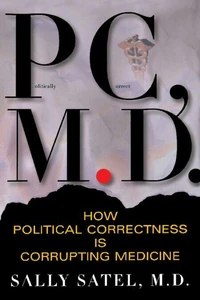
P.C., M.D.
E-book
5,99 €