SOLDES
Jusqu'à -70% sur une sélection d'articles*

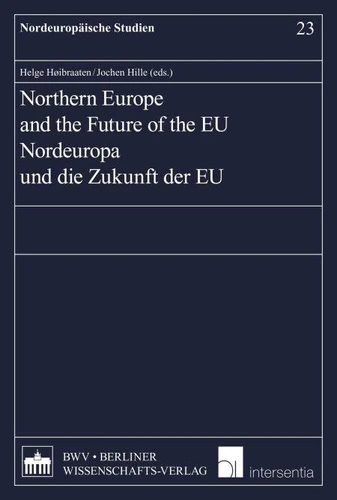
Northern Europe and the Future of the EU. Nordeuropa und die Zukunft der EU
Par : ,Formats :
Disponible dans votre compte client Decitre ou Furet du Nord dès validation de votre commande. Le format PDF est :
- Compatible avec une lecture sur My Vivlio (smartphone, tablette, ordinateur)
- Compatible avec une lecture sur liseuses Vivlio
- Pour les liseuses autres que Vivlio, vous devez utiliser le logiciel Adobe Digital Edition. Non compatible avec la lecture sur les liseuses Kindle, Remarkable et Sony
 , qui est-ce ?
Notre partenaire de plateforme de lecture numérique où vous retrouverez l'ensemble de vos ebooks gratuitement
Pour en savoir plus sur nos ebooks, consultez notre aide en ligne ici
C'est si simple ! Lisez votre ebook avec l'app Vivlio sur votre tablette, mobile ou ordinateur :

- Nombre de pages233
- FormatPDF
- ISBN978-3-8305-2704-6
- EAN9783830527046
- Date de parution10/08/2012
- Protection num.Digital Watermarking
- Taille1 Mo
- Infos supplémentairespdf
- ÉditeurBWV
Résumé
The current relationship between the Nordic countries and the European Union appears complex and confusing. Although Denmark, in 1973, and Sweden and Finland, in 1995, joined the European Union, the entry of Norway into the Union was rejected in the plebiscites of 1972 and 1994. Furthermore, Nordic EU members enjoy permanent exceptions to their integration into the EU: Denmark and Sweden, like the U.
K., have declined to become part of the monetary union. Finland is essentially the only Nordic country that entered the EU without substantial exceptions. A membership bid from Iceland was unthinkable; after the fi nancial crisis - which is not the topic of this book - Iceland applied for membership in 2010 and has been in discussions with the European Commission ever since. In other words: the European Union divides Nordic societies, which has resulted in a series of national exceptions to the integration process.
Taken together, these exceptions have created an integration process whose overall geometry is contradictory and paradoxical. Considering this melange, this book will discuss the actual state of Nordic integration into the EU from many different perspectives and illuminate future developments in the fi eld of integration. Where is the North relative to Europe today? How can the geometry of Northern Europe's integration, developed over a long time, be characterised? What are the challenges that threaten further development of Nordic-European relationships?
K., have declined to become part of the monetary union. Finland is essentially the only Nordic country that entered the EU without substantial exceptions. A membership bid from Iceland was unthinkable; after the fi nancial crisis - which is not the topic of this book - Iceland applied for membership in 2010 and has been in discussions with the European Commission ever since. In other words: the European Union divides Nordic societies, which has resulted in a series of national exceptions to the integration process.
Taken together, these exceptions have created an integration process whose overall geometry is contradictory and paradoxical. Considering this melange, this book will discuss the actual state of Nordic integration into the EU from many different perspectives and illuminate future developments in the fi eld of integration. Where is the North relative to Europe today? How can the geometry of Northern Europe's integration, developed over a long time, be characterised? What are the challenges that threaten further development of Nordic-European relationships?