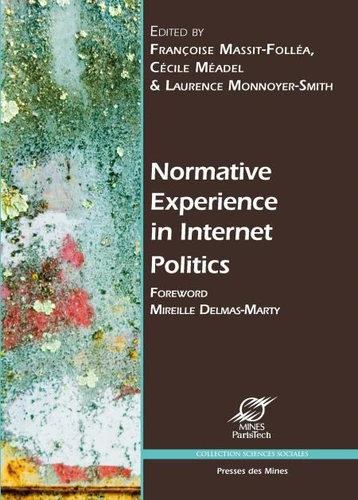
Normative Experience in Internet Politics
Par : , ,Formats :
Disponible dans votre compte client Decitre ou Furet du Nord dès validation de votre commande. Le format Multi-format est :
- Pour les liseuses autres que Vivlio, vous devez utiliser le logiciel Adobe Digital Edition. Non compatible avec la lecture sur les liseuses Kindle, Remarkable et Sony
 , qui est-ce ?
Notre partenaire de plateforme de lecture numérique où vous retrouverez l'ensemble de vos ebooks gratuitement
Pour en savoir plus sur nos ebooks, consultez notre aide en ligne ici
C'est si simple ! Lisez votre ebook avec l'app Vivlio sur votre tablette, mobile ou ordinateur :

- Nombre de pages265
- FormatMulti-format
- ISBN978-2-35671-087-1
- EAN9782356710871
- Date de parution16/04/2013
- Protection num.NC
- Infos supplémentairesMulti-format incluant Mobipocket...
- ÉditeurPresses des Mines via OpenEditio...
- PréfacierMireille Delmas-Marty
Résumé
The ways in which the Internet is managed and controlled -often labeled as Internet Governance- are usually considered as standing on four main pillars: Technology, Market Laws, State Regulation and Uses. Nevertheless, its specific features, the consequences of the plurality of norms it involves and of the decision-making processes it entails are rarely addressed in a comprehensive analysis. This book explores the Internet's functioning both as a practical-intellectual experience and a political challenge.
By means of several case studies, it proposes a substantial and reflexive treatment of multileveled, formal or informal Internet Politics. The book's overall endeavor is to outline an understanding of what is -or may be- a "digital common good". The authors are members of a European academic team gathered by the Vox Internet research program's meetings. They adopt a multi-disciplinary approach, embedding technological innovation in the field of social sciences (communication studies, sociology, law, political science and philosophy).
By means of several case studies, it proposes a substantial and reflexive treatment of multileveled, formal or informal Internet Politics. The book's overall endeavor is to outline an understanding of what is -or may be- a "digital common good". The authors are members of a European academic team gathered by the Vox Internet research program's meetings. They adopt a multi-disciplinary approach, embedding technological innovation in the field of social sciences (communication studies, sociology, law, political science and philosophy).
A propos de Françoise Massit-Folléa



17,99 €