Alyssa Gonzalez is a biology Ph. D., public speaker and writer. She writes extensively about biology, history, sociology and her experiences as an autistic ex-Catholic Hispanic transgender immigrant to Canada at The Perfumed Void.
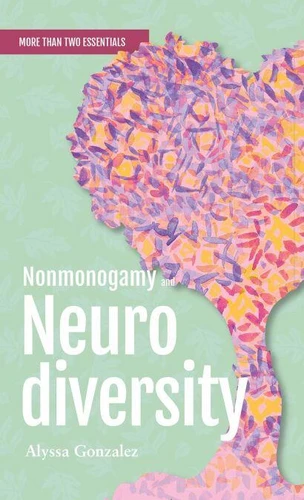
Nonmonogamy and Neurodiversity. A More Than Two Essentials Guide
Par :Formats :
Disponible dans votre compte client Decitre ou Furet du Nord dès validation de votre commande. Le format ePub est :
- Compatible avec une lecture sur My Vivlio (smartphone, tablette, ordinateur)
- Compatible avec une lecture sur liseuses Vivlio
- Pour les liseuses autres que Vivlio, vous devez utiliser le logiciel Adobe Digital Edition. Non compatible avec la lecture sur les liseuses Kindle, Remarkable et Sony
 , qui est-ce ?
Notre partenaire de plateforme de lecture numérique où vous retrouverez l'ensemble de vos ebooks gratuitement
Pour en savoir plus sur nos ebooks, consultez notre aide en ligne ici
C'est si simple ! Lisez votre ebook avec l'app Vivlio sur votre tablette, mobile ou ordinateur :

- FormatePub
- ISBN978-1-990869-18-1
- EAN9781990869181
- Date de parution17/02/2023
- Protection num.Digital Watermarking
- Taille2 Mo
- Infos supplémentairesepub
- ÉditeurThornapple Press
Résumé
A practical guide that explores how nonmonogamous relationships do not belong exclusively to the neurotypicals, but to us all. Too often, the neurodivergent community is marginalized, de-sexualized or patronized. Neurodivergent people are often not seen as part of the romantic or sexual landscape, let alone as people who can have multiple partners. However, the fact that neurodivergent people do not see the world or operate within it as other people do makes nonmonogamy both uniquely challenging and uniquely well-suited to them.
This book is for neurodivergent people considering or practicing nonmonogamy. Its goal is to help neurodivergent people understand how well-suited they are to the polyamorous life, and to help them recognize and manage the challenges that being neurodivergent can bring to nonmonogamy. It is also for the partners and potential partners of neurodivergent people, to encourage them to understand different perspectives and to help them be understanding, accommodating and well-informed.
Nonmonogamous relationships do not belong exclusively to the neurotypicals, but to us all.
This book is for neurodivergent people considering or practicing nonmonogamy. Its goal is to help neurodivergent people understand how well-suited they are to the polyamorous life, and to help them recognize and manage the challenges that being neurodivergent can bring to nonmonogamy. It is also for the partners and potential partners of neurodivergent people, to encourage them to understand different perspectives and to help them be understanding, accommodating and well-informed.
Nonmonogamous relationships do not belong exclusively to the neurotypicals, but to us all.