
Carrie Jenkins is a professor of philosophy at the University of British Columbia and the author of What Love Is (and What it Could Be) and Sad Love: Romance and the Search for Meaning. She holds a PhD in philosophy from Trinity College, Cambridge, and an MFA in creative writing from UBC.
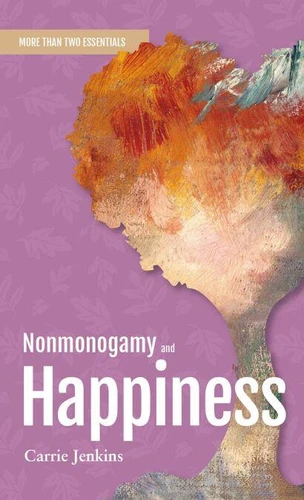
Nonmonogamy and Happiness. A More Than Two Essentials Guide
Par :Formats :
Disponible dans votre compte client Decitre ou Furet du Nord dès validation de votre commande. Le format ePub est :
- Compatible avec une lecture sur My Vivlio (smartphone, tablette, ordinateur)
- Compatible avec une lecture sur liseuses Vivlio
- Pour les liseuses autres que Vivlio, vous devez utiliser le logiciel Adobe Digital Edition. Non compatible avec la lecture sur les liseuses Kindle, Remarkable et Sony
 , qui est-ce ?
Notre partenaire de plateforme de lecture numérique où vous retrouverez l'ensemble de vos ebooks gratuitement
Pour en savoir plus sur nos ebooks, consultez notre aide en ligne ici
C'est si simple ! Lisez votre ebook avec l'app Vivlio sur votre tablette, mobile ou ordinateur :

- FormatePub
- ISBN978-1-990869-17-4
- EAN9781990869174
- Date de parution10/11/2023
- Protection num.Digital Watermarking
- Taille2 Mo
- Infos supplémentairesepub
- ÉditeurThornapple Press
Résumé
A philosophical exploration of what happiness is and the search for meaning in nonmonogamous relationships. The love story we're all familiar with ends with " . and they lived happily ever after." But how often do we hear a nonmonogamous love story with that ending? In all kinds of contexts, nonmonogamous happiness is erased. From the ubiquitous "friend who tried it once and it didn't end well" to Dan Savage's long-term jokes about never being invited to a polyamorous third wedding anniversary, we are repeatedly assured that nonmonogamy leads to misery.
In "real" love, we are taught to expect the opposite: to expect happiness. When we want to ask if someone's relationship is going well, we ask if they are "happy with" their partner. We might even ask whether their partner makes them happy. But what does love have to do with happiness?Doesn't love have space to accommodate the full range of emotional experience? Carrie Jenkins thinks it does, or at least it can.
She draws connections between the expectation that love will make us happy and the undue focus on positive emotions to the exclusion of "negative" ones. She argues that love-monogamous or otherwise-might better aim at being eudaimonic than at being happy, and that we have a better chance of achieving this if we are able to make relationship choices free from the prejudices and distortions that lead to an unduly rosy view of monogamy and an unduly miserable picture of the alternatives.
In "real" love, we are taught to expect the opposite: to expect happiness. When we want to ask if someone's relationship is going well, we ask if they are "happy with" their partner. We might even ask whether their partner makes them happy. But what does love have to do with happiness?Doesn't love have space to accommodate the full range of emotional experience? Carrie Jenkins thinks it does, or at least it can.
She draws connections between the expectation that love will make us happy and the undue focus on positive emotions to the exclusion of "negative" ones. She argues that love-monogamous or otherwise-might better aim at being eudaimonic than at being happy, and that we have a better chance of achieving this if we are able to make relationship choices free from the prejudices and distortions that lead to an unduly rosy view of monogamy and an unduly miserable picture of the alternatives.
A propos de Carrie Jenkins
6,95 €
19,95 €

14,99 €