SOLDES
Jusqu'à -70% sur une sélection d'articles*

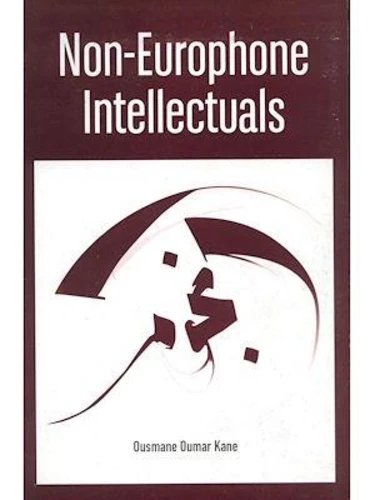
Non-europhone intellectuals
Par :Formats :
Disponible dans votre compte client Decitre ou Furet du Nord dès validation de votre commande. Le format ePub est :
- Compatible avec une lecture sur My Vivlio (smartphone, tablette, ordinateur)
- Compatible avec une lecture sur liseuses Vivlio
- Pour les liseuses autres que Vivlio, vous devez utiliser le logiciel Adobe Digital Edition. Non compatible avec la lecture sur les liseuses Kindle, Remarkable et Sony
 , qui est-ce ?
Notre partenaire de plateforme de lecture numérique où vous retrouverez l'ensemble de vos ebooks gratuitement
Pour en savoir plus sur nos ebooks, consultez notre aide en ligne ici
C'est si simple ! Lisez votre ebook avec l'app Vivlio sur votre tablette, mobile ou ordinateur :

- Nombre de pages208
- FormatePub
- ISBN978-2-37918-450-5
- EAN9782379184505
- Date de parution30/06/2021
- Protection num.Digital Watermarking
- Taille461 Ko
- Infos supplémentairesepub
- ÉditeurNENA
Résumé
The history of Arabic writing spans a period of eight hundred years in sub-Saharan Africa. Hundreds of thousands of manuscripts in Arabic or Ajami (African languages written with the Arabic script) are preserved in public libraries and private collections in sub-Saharan Africa. This « Islamic Library » includes historical, devotional, pedagogical, polemical and political writings, most of which have not yet been adequately studied.
This book, Non-Europhone Intellectuels, studies the research carried out on the Islamic library and shows that Muslim intellectuals, in West Africa in particular, have produced huge literature in Arabic and Ajami. It is impossible to reconstitute library completely. As the texts have existed for centuries and are mostly in the form of unpublished manuscripts, only some of them have been transmitted to us while others have perished because of poor conservation.
Efforts toward collecting them continues and the documents collected thus far attest to an intense intellectual life and important debates on society that have been completely ignored by the overwhelming majority of Europhone intellectuals. During European colonial rule and after the independence of African nations, Islamic education experienced some neglect, but the Islamic scholarly tradition did not decline.
On the contrary, it has prospered with the proliferation of modern Islamic schools and the rise of dozens of Islamic institutions of higher learning. In recent years, the field of Islamic studies in West Africa has continued to attract the attention of erudite scholars, notably in anthropology and history, who are investing in learning the languages and working on this Islamic archive. As more analytical works are done on this archive, there will be continued modification in terms of the debate on knowledge production in West Africa.
This book, Non-Europhone Intellectuels, studies the research carried out on the Islamic library and shows that Muslim intellectuals, in West Africa in particular, have produced huge literature in Arabic and Ajami. It is impossible to reconstitute library completely. As the texts have existed for centuries and are mostly in the form of unpublished manuscripts, only some of them have been transmitted to us while others have perished because of poor conservation.
Efforts toward collecting them continues and the documents collected thus far attest to an intense intellectual life and important debates on society that have been completely ignored by the overwhelming majority of Europhone intellectuals. During European colonial rule and after the independence of African nations, Islamic education experienced some neglect, but the Islamic scholarly tradition did not decline.
On the contrary, it has prospered with the proliferation of modern Islamic schools and the rise of dozens of Islamic institutions of higher learning. In recent years, the field of Islamic studies in West Africa has continued to attract the attention of erudite scholars, notably in anthropology and history, who are investing in learning the languages and working on this Islamic archive. As more analytical works are done on this archive, there will be continued modification in terms of the debate on knowledge production in West Africa.