
Lotte Hughes is a freelance journalist and historian, with a particular interest in the Maasai of east Africa and oral history. She has written about development and human rights issues for newspapers and NGOs and won the John Morgan Writing Award.
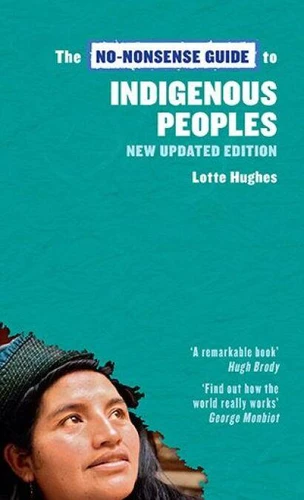
No-Nonsense Guide to Indigenous Peoples, Second Edition
Par :Formats :
Disponible dans votre compte client Decitre ou Furet du Nord dès validation de votre commande. Le format ePub est :
- Compatible avec une lecture sur My Vivlio (smartphone, tablette, ordinateur)
- Compatible avec une lecture sur liseuses Vivlio
- Pour les liseuses autres que Vivlio, vous devez utiliser le logiciel Adobe Digital Edition. Non compatible avec la lecture sur les liseuses Kindle, Remarkable et Sony
 , qui est-ce ?
Notre partenaire de plateforme de lecture numérique où vous retrouverez l'ensemble de vos ebooks gratuitement
Pour en savoir plus sur nos ebooks, consultez notre aide en ligne ici
C'est si simple ! Lisez votre ebook avec l'app Vivlio sur votre tablette, mobile ou ordinateur :

- Nombre de pages144
- FormatePub
- ISBN978-1-926662-97-8
- EAN9781926662978
- Date de parution01/04/2012
- Protection num.Digital Watermarking
- Taille2 Mo
- Infos supplémentairesepub
- ÉditeurBetween the Lines
Résumé
Since the first edition of the No-Nonsense Guide to Indigenous Peoples was published in 2003, much has changed. The United Nations General Assembly has adopted the UN Declaration on the Rights of Indigenous Peoples. Indigenous rights have become an increasingly important subject in international law, with Bolivia's first indigenous president, Evo Morales, arguing on the international stage from an indigenous perspective, and introducing policies benefiting indigenous communities through land reforms and redistribution of wealth.
Moreover, there has been a surge in indigenous activism and advocacy, with the growth of a global indigenous rights industry, the effects of which are not always positive. This updated edition reflects the changing context and examines the developments as well as the tensions and contradictions, and includes as many direct voices as possible.
Moreover, there has been a surge in indigenous activism and advocacy, with the growth of a global indigenous rights industry, the effects of which are not always positive. This updated edition reflects the changing context and examines the developments as well as the tensions and contradictions, and includes as many direct voices as possible.