SOLDES
Jusqu'à -70% sur une sélection d'articles*

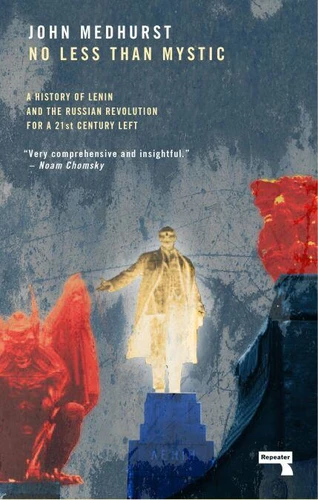
No Less Than Mystic. A History of Lenin and the Russian Revolution for a 21st-Century Left
Par :Formats :
Disponible dans votre compte client Decitre ou Furet du Nord dès validation de votre commande. Le format ePub protégé est :
- Compatible avec une lecture sur My Vivlio (smartphone, tablette, ordinateur)
- Compatible avec une lecture sur liseuses Vivlio
- Pour les liseuses autres que Vivlio, vous devez utiliser le logiciel Adobe Digital Edition. Non compatible avec la lecture sur les liseuses Kindle, Remarkable et Sony
- Non compatible avec un achat hors France métropolitaine
 , qui est-ce ?
Notre partenaire de plateforme de lecture numérique où vous retrouverez l'ensemble de vos ebooks gratuitement
Pour en savoir plus sur nos ebooks, consultez notre aide en ligne ici
C'est si simple ! Lisez votre ebook avec l'app Vivlio sur votre tablette, mobile ou ordinateur :

- Nombre de pages300
- FormatePub
- ISBN978-1-910924-48-8
- EAN9781910924488
- Date de parution22/08/2017
- Protection num.Adobe DRM
- Taille847 Ko
- Infos supplémentairesepub
- ÉditeurRepeater
Résumé
Published in the centenary year of the 1917 Russian Revolution, No Less Than Mystic is a fresh and iconoclastic history of Lenin and the Bolsheviks for a generation uninterested in Cold War ideologies and stereotypes. Although it offers a full and complete history of Leninism, 1917, the Russian Civil War and its aftermath, the book devotes more time than usual to the policies and actions of the socialist alternatives to Bolshevism - to the Menshevik Internationalists, the Socialist Revolutionaries (SRs), the Jewish Bundists and the anarchists.
It prioritises Factory Committees, local Soviets, the Womens' Zhenotdel movement, Proletkult and the Kronstadt sailors as much as the statements and actions of Lenin and Trotsky. Using the neglected writings and memoirs of Mensheviks like Julius Martov, SRs like Victor Chernov, Bolshevik oppositionists like Alexandra Kollontai and anarchists like Nestor Makhno, it traces a revolution gone wrong and suggests how it might have produced a more libertarian, emancipatory socialism than that created by Lenin and the Bolsheviks. Although the book broadly covers the period from 1903 (the formation of the Bolsheviks and Mensheviks) to 1921 (the suppression of the Kronstadt rebellion) and explains why the Bolshevik Revolution degenerated so quickly into its apparent opposite, it continually examines the Leninist experiment through the lens of a 21st century, de-centralised, ecological, anti-productivist and feminist socialism.
Throughout its narrative it interweaves and draws parallels with contemporary anti-capitalist struggles such as those of the Zapatistas, the Kurds, the Argentinean "Recovered Factories", Occupy, the Arab Spring, the Indignados and Intersectional feminists, attempting to open up the past to the present and points in between. We do not need another standard history of the Russian Revolution. This is not one.
It prioritises Factory Committees, local Soviets, the Womens' Zhenotdel movement, Proletkult and the Kronstadt sailors as much as the statements and actions of Lenin and Trotsky. Using the neglected writings and memoirs of Mensheviks like Julius Martov, SRs like Victor Chernov, Bolshevik oppositionists like Alexandra Kollontai and anarchists like Nestor Makhno, it traces a revolution gone wrong and suggests how it might have produced a more libertarian, emancipatory socialism than that created by Lenin and the Bolsheviks. Although the book broadly covers the period from 1903 (the formation of the Bolsheviks and Mensheviks) to 1921 (the suppression of the Kronstadt rebellion) and explains why the Bolshevik Revolution degenerated so quickly into its apparent opposite, it continually examines the Leninist experiment through the lens of a 21st century, de-centralised, ecological, anti-productivist and feminist socialism.
Throughout its narrative it interweaves and draws parallels with contemporary anti-capitalist struggles such as those of the Zapatistas, the Kurds, the Argentinean "Recovered Factories", Occupy, the Arab Spring, the Indignados and Intersectional feminists, attempting to open up the past to the present and points in between. We do not need another standard history of the Russian Revolution. This is not one.