
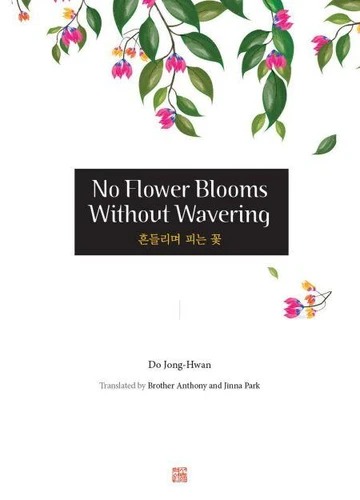
No Flower Blooms Without Wavering
Par :Formats :
Disponible dans votre compte client Decitre ou Furet du Nord dès validation de votre commande. Le format ePub est :
- Compatible avec une lecture sur My Vivlio (smartphone, tablette, ordinateur)
- Compatible avec une lecture sur liseuses Vivlio
- Pour les liseuses autres que Vivlio, vous devez utiliser le logiciel Adobe Digital Edition. Non compatible avec la lecture sur les liseuses Kindle, Remarkable et Sony
 , qui est-ce ?
Notre partenaire de plateforme de lecture numérique où vous retrouverez l'ensemble de vos ebooks gratuitement
Pour en savoir plus sur nos ebooks, consultez notre aide en ligne ici
C'est si simple ! Lisez votre ebook avec l'app Vivlio sur votre tablette, mobile ou ordinateur :

- FormatePub
- ISBN978-1-62412-071-8
- EAN9781624120718
- Date de parution16/06/2016
- Protection num.pas de protection
- Infos supplémentairesepub
- ÉditeurSEOUL SELECTION CO LTD
Résumé
Translated from the Korean by Brother Anthony, President of the Royal Asiatic Society Korea Branch and translator who has introduced international readers to several Korean works. An English rendition of a collection of poetry by Do Jonghwan, one of Korea's most beloved poets. Do's literary career started in 1984, when he released Age of Division while teaching Korean language and literature to highschool students.
His second poetry collection, You the Hollyhock, sold over a million copies and was made into a film, and he became one of Korea's most influential poets during the 1980s, popular among critics and readers alike. Through poetry, Do found beauty in the poverty of his youth and in the sadness and pain from losing his wife to illness. He portrays flowers, trees, creeks, wind, mountains, and other shifts in nature through a unique poetic sensibility.
Having accepted poetry as his "fate and companion, " he conveys simple truths and wisdom, such as how life matures and finds beauty amid pain and suffering.
His second poetry collection, You the Hollyhock, sold over a million copies and was made into a film, and he became one of Korea's most influential poets during the 1980s, popular among critics and readers alike. Through poetry, Do found beauty in the poverty of his youth and in the sadness and pain from losing his wife to illness. He portrays flowers, trees, creeks, wind, mountains, and other shifts in nature through a unique poetic sensibility.
Having accepted poetry as his "fate and companion, " he conveys simple truths and wisdom, such as how life matures and finds beauty amid pain and suffering.