
Andreas Müller was born and grew up in Southern Germany. After having become a spiritual seeker in his teens, he met Tony Parsons in 2009. Since 2011, Andreas has been holding talks and intensives throughout the world.
Justin Allen is an architect in Berlin, Germany. Justin has a background in philosophy and he is originally from upstate New York.
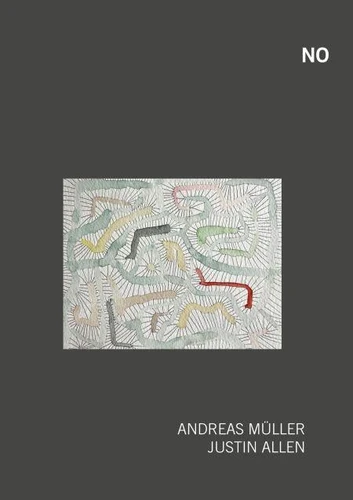
No
Par : ,Formats :
Disponible dans votre compte client Decitre ou Furet du Nord dès validation de votre commande. Le format ePub est :
- Compatible avec une lecture sur My Vivlio (smartphone, tablette, ordinateur)
- Compatible avec une lecture sur liseuses Vivlio
- Pour les liseuses autres que Vivlio, vous devez utiliser le logiciel Adobe Digital Edition. Non compatible avec la lecture sur les liseuses Kindle, Remarkable et Sony
 , qui est-ce ?
Notre partenaire de plateforme de lecture numérique où vous retrouverez l'ensemble de vos ebooks gratuitement
Pour en savoir plus sur nos ebooks, consultez notre aide en ligne ici
C'est si simple ! Lisez votre ebook avec l'app Vivlio sur votre tablette, mobile ou ordinateur :

- Nombre de pages168
- FormatePub
- ISBN978-3-7693-3380-0
- EAN9783769333800
- Date de parution19/12/2024
- Protection num.Digital Watermarking
- Taille5 Mo
- Infos supplémentairesepub
- ÉditeurBoD - Books on Demand
Résumé
"No" is the final, and perhaps most perplexing, chapter in the "No-Point" trilogy. If "No-Point Perspective" was the encyclopedia of nothingness for dummies and "No-Point" the professional's handbook, then "No" is the blank page at the end, the echo of a conversation that has finally run its course.
Justin Allen and Andreas Müller, having exhausted all avenues of inquiry, meet face-to-face in Andreas' quaint village.
The words dwindle, the silences grow longer, and the "no-point" reveals itself not as a concept to be grasped, but as what's apparently happening - life. With its minimalist title and even more minimalist content, "No" is a book that defies categorization. It's not about non-duality, it's not about spirituality, it's not even about nothing. It's simply "No, " the final reduction of the original title of this trilogy. A fitting conclusion to a series of talks that started with a grand exploration and ended with a whisper, "No" invites you to step off the precipice of meaning and into the vast openness of what is.
The words dwindle, the silences grow longer, and the "no-point" reveals itself not as a concept to be grasped, but as what's apparently happening - life. With its minimalist title and even more minimalist content, "No" is a book that defies categorization. It's not about non-duality, it's not about spirituality, it's not even about nothing. It's simply "No, " the final reduction of the original title of this trilogy. A fitting conclusion to a series of talks that started with a grand exploration and ended with a whisper, "No" invites you to step off the precipice of meaning and into the vast openness of what is.
A propos de Andreas Müller

Wat schijnt te gebeuren
E-book
7,99 €
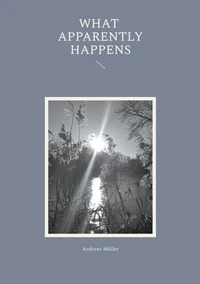
What apparently happens
E-book
7,99 €
4,99 €
7,99 €
6,49 €

Was scheinbar passiert
E-book
7,99 €
5,99 €

7,99 €
4,49 €