
Lisa Robertson lives in the Vienne region of France. Her most recent books of poetry are 3 Summers, Cinema of the Present, and Lisa Robertson's Magenta Soul Whip, which was selected by the New York Times as one of the 100 best books of 2010. Her book R's Boat was shortlisted for The Believer's 2011 Poetry award. In 2006, BookThug published The Men: a Lyric Book.
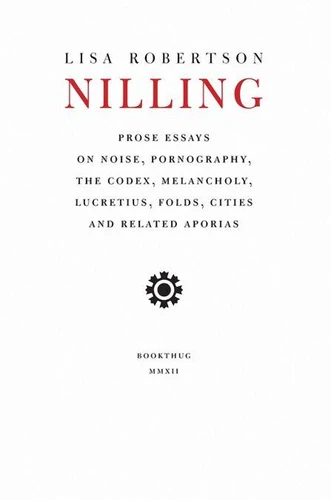
Nilling. Prose Essays on Noise, Pornography, The Codex, Melancholy, Lucretiun, Folds, Cities and Related Aporias
Par :Formats :
Disponible dans votre compte client Decitre ou Furet du Nord dès validation de votre commande. Le format ePub est :
- Compatible avec une lecture sur My Vivlio (smartphone, tablette, ordinateur)
- Compatible avec une lecture sur liseuses Vivlio
- Pour les liseuses autres que Vivlio, vous devez utiliser le logiciel Adobe Digital Edition. Non compatible avec la lecture sur les liseuses Kindle, Remarkable et Sony
 , qui est-ce ?
Notre partenaire de plateforme de lecture numérique où vous retrouverez l'ensemble de vos ebooks gratuitement
Pour en savoir plus sur nos ebooks, consultez notre aide en ligne ici
C'est si simple ! Lisez votre ebook avec l'app Vivlio sur votre tablette, mobile ou ordinateur :

- Nombre de pages96
- FormatePub
- ISBN978-1-927040-32-4
- EAN9781927040324
- Date de parution31/03/2012
- Protection num.Digital Watermarking
- Taille635 Ko
- Infos supplémentairesepub
- ÉditeurBookThug
Résumé
Nilling is a sequence of 6 loosely linked prose essays about noise, pornography, the codex, melancholy, Lucretius, folds, cities and related aporias: in short, these are essays on reading. Lisa Robertson applies an acute eye to the subject of reading and writing-two elemental forces that, she suggests, cannot be separated. For Robertson, a book is an intimacy, and with keen and insightful language, Nilling's essays builds into a lively yet close conversation with Robertson's "masters": past writers, philosophers, and idealists who have guided her reading (and writing) practice to this point.
If "a reader is a beginner, " then even regular readers of Robertson's kind of deep thinking will delight in the infinite folding together of concepts-the codex, pornography, melancholy, cities-that on their own may seem banal, but in their twisting intertextuality, make for a scintillating study of reading as a deep engagement.
If "a reader is a beginner, " then even regular readers of Robertson's kind of deep thinking will delight in the infinite folding together of concepts-the codex, pornography, melancholy, cities-that on their own may seem banal, but in their twisting intertextuality, make for a scintillating study of reading as a deep engagement.
A propos de Lisa Robertson
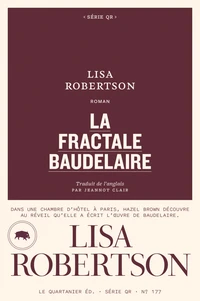
La fractale Baudelaire
Grand Format
21,00 €
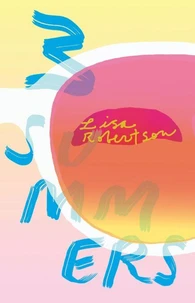
3 Summers
E-book
8,99 €
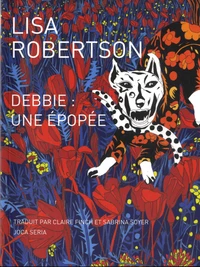
Debbie : une épopée
Grand Format
17,00 €

Le temps
Grand Format
14,00 €
15,00 €