SOLDES
Jusqu'à -70% sur une sélection d'articles*

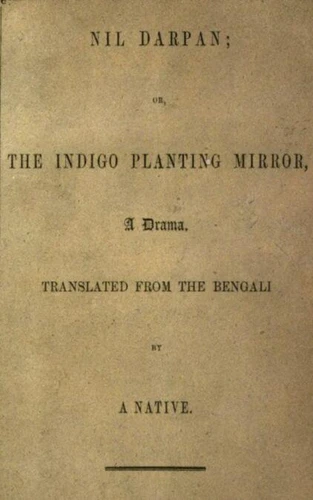
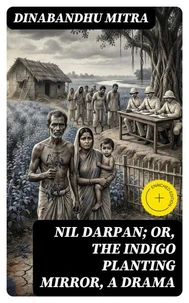
Nil Darpan; or, The Indigo Planting Mirror
Par :Formats :
Disponible dans votre compte client Decitre ou Furet du Nord dès validation de votre commande. Le format ePub est :
- Compatible avec une lecture sur My Vivlio (smartphone, tablette, ordinateur)
- Compatible avec une lecture sur liseuses Vivlio
- Pour les liseuses autres que Vivlio, vous devez utiliser le logiciel Adobe Digital Edition. Non compatible avec la lecture sur les liseuses Kindle, Remarkable et Sony
 , qui est-ce ?
Notre partenaire de plateforme de lecture numérique où vous retrouverez l'ensemble de vos ebooks gratuitement
Pour en savoir plus sur nos ebooks, consultez notre aide en ligne ici
C'est si simple ! Lisez votre ebook avec l'app Vivlio sur votre tablette, mobile ou ordinateur :

- Nombre de pages179
- FormatePub
- ISBN978-3-7364-1963-6
- EAN9783736419636
- Date de parution19/06/2017
- Protection num.Digital Watermarking
- Taille232 Ko
- Infos supplémentairesepub
- ÉditeurAndhof
Résumé
The original Bengali of this Drama-the Nil Darpan, or Indigo Planting Mirror-having excited considerable interest, a wish was expressed by various Europeans to see a translation of it. This has been made by a Native; both the original and translation are bonâ fide Native productions and depict the Indigo Planting System as viewed by Natives at large.
The Drama is the favourite mode with the Hindus for describing certain states of society, manners, customs.
Since the days of Sir W. Jones, by scholars at Paris, St. Petersburgh, and London, the Sanskrit Drama has, in this point of view, been highly appreciated. The Bengali Drama imitates in this respect its Sanskrit parent. The evils of Kulin Brahminism, widow marriage prohibition, quackery, fanaticism, have been depicted by it with great effect. Nor has the system of Indigo planting escaped notice: hence the origin of this work, the Nil Darpan, which, though exhibiting no marvellous or very tragic scenes, yet, in simple homely language, gives the "annals of the poor;" pleads the cause of those who are the feeble; it describes a respectable ryot, a peasant proprietor, happy with his family in the enjoyment of his land till the Indigo System compelled him to take advances, to neglect his own land, to cultivate crops which beggared him, reducing him to the condition of a serf and a vagabond; the effect of this on his home, children, and relatives are pointed out in language, plain but true; it shows how arbitrary power debases the lord as well as the peasant; reference is also made to the partiality of various Magistrates in favor of Planters and to the Act of last year penally enforcing Indigo contracts.
Since the days of Sir W. Jones, by scholars at Paris, St. Petersburgh, and London, the Sanskrit Drama has, in this point of view, been highly appreciated. The Bengali Drama imitates in this respect its Sanskrit parent. The evils of Kulin Brahminism, widow marriage prohibition, quackery, fanaticism, have been depicted by it with great effect. Nor has the system of Indigo planting escaped notice: hence the origin of this work, the Nil Darpan, which, though exhibiting no marvellous or very tragic scenes, yet, in simple homely language, gives the "annals of the poor;" pleads the cause of those who are the feeble; it describes a respectable ryot, a peasant proprietor, happy with his family in the enjoyment of his land till the Indigo System compelled him to take advances, to neglect his own land, to cultivate crops which beggared him, reducing him to the condition of a serf and a vagabond; the effect of this on his home, children, and relatives are pointed out in language, plain but true; it shows how arbitrary power debases the lord as well as the peasant; reference is also made to the partiality of various Magistrates in favor of Planters and to the Act of last year penally enforcing Indigo contracts.