SOLDES
Jusqu'à -70% sur une sélection d'articles*

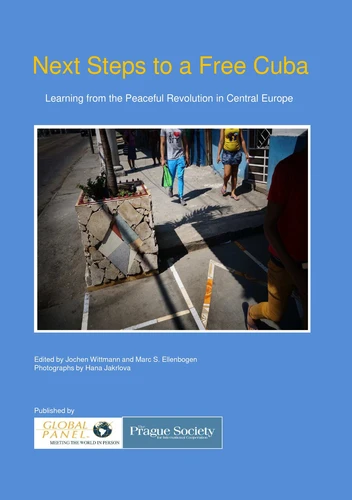
Next Steps to a Free Cuba. Learning from the Peaceful Revolution in Central Europe
Par : ,Formats :
Disponible dans votre compte client Decitre ou Furet du Nord dès validation de votre commande. Le format ePub est :
- Compatible avec une lecture sur My Vivlio (smartphone, tablette, ordinateur)
- Compatible avec une lecture sur liseuses Vivlio
- Pour les liseuses autres que Vivlio, vous devez utiliser le logiciel Adobe Digital Edition. Non compatible avec la lecture sur les liseuses Kindle, Remarkable et Sony
 , qui est-ce ?
Notre partenaire de plateforme de lecture numérique où vous retrouverez l'ensemble de vos ebooks gratuitement
Pour en savoir plus sur nos ebooks, consultez notre aide en ligne ici
C'est si simple ! Lisez votre ebook avec l'app Vivlio sur votre tablette, mobile ou ordinateur :

- Nombre de pages236
- FormatePub
- ISBN978-3-7431-1072-4
- EAN9783743110724
- Date de parution20/02/2017
- Protection num.Digital Watermarking
- Taille3 Mo
- Infos supplémentairesepub
- ÉditeurBooks on Demand
Résumé
The Global Panel Foundation and The Prague Society for International Cooperation are committed to bringing people together to discuss and broaden our knowledge. We will use our experience to apply new concepts and frameworks for sustainable development in Cuba. During a series of public policy sessions in Berlin, Germany, diverse groups of Cuban human rights activists and dissidents, politicians, businessmen and academics were brought together.
They discussed concepts, frameworks, cases, tools, and the best practices to cope with the emerging challenges to Cuba. Building on the foregoing, this work collects contributions by authors covering Cuban as well as Central European perspectives. The articles have been grouped into six parts according to the schedule of public policy sessions: Cubans meet Bundestag; Leadership in Cuba; Lessons learnt from 1989/90; The Cuba Strategy from a German perspective, and Cuba from a Czech and Latvian perspective.
Initiatives for Change in Cuba close the publication. This work gives an outlook for further activities relating to democratize Cuba.
They discussed concepts, frameworks, cases, tools, and the best practices to cope with the emerging challenges to Cuba. Building on the foregoing, this work collects contributions by authors covering Cuban as well as Central European perspectives. The articles have been grouped into six parts according to the schedule of public policy sessions: Cubans meet Bundestag; Leadership in Cuba; Lessons learnt from 1989/90; The Cuba Strategy from a German perspective, and Cuba from a Czech and Latvian perspective.
Initiatives for Change in Cuba close the publication. This work gives an outlook for further activities relating to democratize Cuba.