SOLDES
Jusqu'à -70% sur une sélection d'articles*

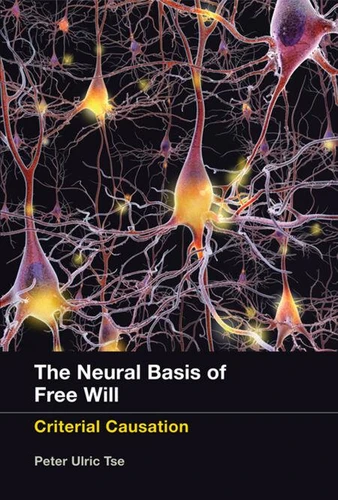
Neural Basis of Free Will
Par :Formats :
Disponible dans votre compte client Decitre ou Furet du Nord dès validation de votre commande. Le format ePub protégé est :
- Compatible avec une lecture sur My Vivlio (smartphone, tablette, ordinateur)
- Compatible avec une lecture sur liseuses Vivlio
- Pour les liseuses autres que Vivlio, vous devez utiliser le logiciel Adobe Digital Edition. Non compatible avec la lecture sur les liseuses Kindle, Remarkable et Sony
- Non compatible avec un achat hors France métropolitaine
 , qui est-ce ?
Notre partenaire de plateforme de lecture numérique où vous retrouverez l'ensemble de vos ebooks gratuitement
Pour en savoir plus sur nos ebooks, consultez notre aide en ligne ici
C'est si simple ! Lisez votre ebook avec l'app Vivlio sur votre tablette, mobile ou ordinateur :

- Nombre de pages472
- FormatePub
- ISBN978-0-262-31316-2
- EAN9780262313162
- Date de parution22/02/2013
- Protection num.Adobe DRM
- Taille2 Mo
- Infos supplémentairesepub
- ÉditeurThe MIT Press
Résumé
A neuroscientific perspective on the mind-body problem that focuses on how the brain actually accomplishes mental causation. The issues of mental causation, consciousness, and free will have vexed philosophers since Plato. In this book, Peter Tse examines these unresolved issues from a neuroscientific perspective. In contrast with philosophers who use logic rather than data to argue whether mental causation or consciousness can exist given unproven first assumptions, Tse proposes that we instead listen to what neurons have to say.
Tse draws on exciting recent neuroscientific data concerning how informational causation is realized in physical causation at the level of NMDA receptors, synapses, dendrites, neurons, and neuronal circuits. He argues that a particular kind of strong free will and "downward" mental causation are realized in rapid synaptic plasticity. Such informational causation cannot change the physical basis of information realized in the present, but it can change the physical basis of information that may be realized in the immediate future.
This gets around the standard argument against free will centered on the impossibility of self-causation. Tse explores the ways that mental causation and qualia might be realized in this kind of neuronal and associated information-processing architecture, and considers the psychological and philosophical implications of having such an architecture realized in our brains.
Tse draws on exciting recent neuroscientific data concerning how informational causation is realized in physical causation at the level of NMDA receptors, synapses, dendrites, neurons, and neuronal circuits. He argues that a particular kind of strong free will and "downward" mental causation are realized in rapid synaptic plasticity. Such informational causation cannot change the physical basis of information realized in the present, but it can change the physical basis of information that may be realized in the immediate future.
This gets around the standard argument against free will centered on the impossibility of self-causation. Tse explores the ways that mental causation and qualia might be realized in this kind of neuronal and associated information-processing architecture, and considers the psychological and philosophical implications of having such an architecture realized in our brains.