SOLDES
Jusqu'à -70% sur une sélection d'articles*

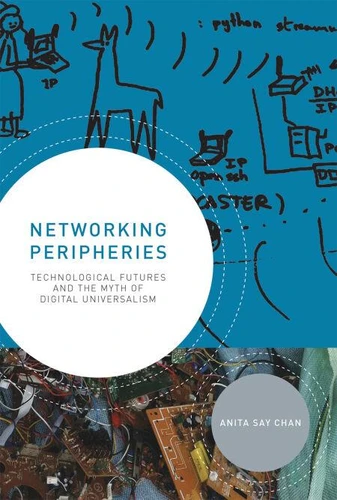
Networking Peripheries. Technological Futures and the Myth of Digital Universalism
Par :Formats :
Disponible dans votre compte client Decitre ou Furet du Nord dès validation de votre commande. Le format ePub protégé est :
- Compatible avec une lecture sur My Vivlio (smartphone, tablette, ordinateur)
- Compatible avec une lecture sur liseuses Vivlio
- Pour les liseuses autres que Vivlio, vous devez utiliser le logiciel Adobe Digital Edition. Non compatible avec la lecture sur les liseuses Kindle, Remarkable et Sony
- Non compatible avec un achat hors France métropolitaine
 , qui est-ce ?
Notre partenaire de plateforme de lecture numérique où vous retrouverez l'ensemble de vos ebooks gratuitement
Pour en savoir plus sur nos ebooks, consultez notre aide en ligne ici
C'est si simple ! Lisez votre ebook avec l'app Vivlio sur votre tablette, mobile ou ordinateur :

- Nombre de pages288
- FormatePub
- ISBN978-0-262-31953-9
- EAN9780262319539
- Date de parution31/01/2014
- Protection num.Adobe DRM
- Taille3 Mo
- Infos supplémentairesepub
- ÉditeurThe MIT Press
Résumé
An exploration of the diverse experiments in digital futures as they advance far from the celebrated centers of technological innovation and entrepreneurship. In Networking Peripheries, Anita Chan shows how digital cultures flourish beyond Silicon Valley and other celebrated centers of technological innovation and entrepreneurship. The evolving digital cultures in the Global South vividly demonstrate that there are more ways than one to imagine what digital practice and global connection could look like.
To explore these alternative developments, Chan investigates the diverse initiatives being undertaken to "network" the nation in contemporary Peru, from attempts to promote the intellectual property of indigenous artisans to the national distribution of digital education technologies to open technology activism in rural and urban zones. Drawing on ethnographic accounts from government planners, regional free-software advocates, traditional artisans, rural educators, and others, Chan demonstrates how such developments unsettle dominant conceptions of information classes and innovations zones.
Government efforts to turn rural artisans into a new creative class progress alongside technology activists' efforts to promote indigenous rights through information tactics; plans pressing for the state wide adoption of open source-based technologies advance while the One Laptop Per Child initiative aims to network rural classrooms by distributing laptops. As these cases show, the digital cultures and network politics emerging on the periphery do more than replicate the technological future imagined as universal from the center.
To explore these alternative developments, Chan investigates the diverse initiatives being undertaken to "network" the nation in contemporary Peru, from attempts to promote the intellectual property of indigenous artisans to the national distribution of digital education technologies to open technology activism in rural and urban zones. Drawing on ethnographic accounts from government planners, regional free-software advocates, traditional artisans, rural educators, and others, Chan demonstrates how such developments unsettle dominant conceptions of information classes and innovations zones.
Government efforts to turn rural artisans into a new creative class progress alongside technology activists' efforts to promote indigenous rights through information tactics; plans pressing for the state wide adoption of open source-based technologies advance while the One Laptop Per Child initiative aims to network rural classrooms by distributing laptops. As these cases show, the digital cultures and network politics emerging on the periphery do more than replicate the technological future imagined as universal from the center.