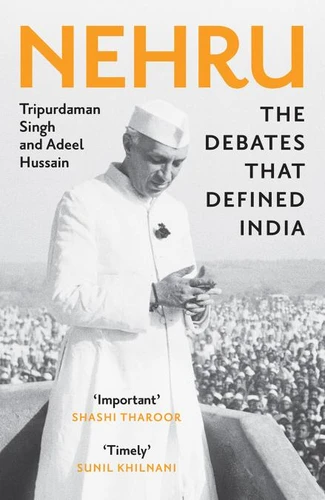
'An important contribution . Delving lucidly into the most significant ideological battles of the era, this book deftly outlines the thinking and dialogue that laid the foundations of the Republic - and which remain deeply relevant and contentious today'Shashi Tharoor, author of Inglorious Empire
A history of Nehru that dives deep into the debates of his era to understand his ideology - and that of his contemporaries and opponents, asking what India would look like had another bold young mind with fiercely held views led during the country's formative years of independence.
Sixty years after the death of Jawaharal Nehru, the independence activist and first prime minister of India continues to be deified and vilified in equal measure.
And still in contemporary political debate, the ideological spectrum remains defined by the degree of divergence from Nehru's ideas. With the Nehruvian ideals increasingly juxtaposed against the positions of Nehru's erstwhile contemporaries and questions asked about what might have happened on the Indian subcontinent had another hero of that era taken leadership, this book explores his encounters with key contemporaries to excavate and evaluate the views that were in circulation.
It examines the founder of Pakistan Mohammad Ali Jinnah and his cause of Hindu-Muslim unity, Shyama Prasad Mookerjee of the Hindu Mahasabha and his fierce defence of the constitution, the Congress leader Sardar Patel, with whom Nehru often disagreed about the threat of China, and Mohammad Iqbal, the poet and politician whose letters on Muslim solidarity were often issued from a prison cell.
The correspondence and interactions that Nehru had with these key personalities captures the essence of how post-independent India was projected as a nation, and the early directions it took towards self-definition.
'An important contribution . Delving lucidly into the most significant ideological battles of the era, this book deftly outlines the thinking and dialogue that laid the foundations of the Republic - and which remain deeply relevant and contentious today'Shashi Tharoor, author of Inglorious Empire
A history of Nehru that dives deep into the debates of his era to understand his ideology - and that of his contemporaries and opponents, asking what India would look like had another bold young mind with fiercely held views led during the country's formative years of independence.
Sixty years after the death of Jawaharal Nehru, the independence activist and first prime minister of India continues to be deified and vilified in equal measure.
And still in contemporary political debate, the ideological spectrum remains defined by the degree of divergence from Nehru's ideas. With the Nehruvian ideals increasingly juxtaposed against the positions of Nehru's erstwhile contemporaries and questions asked about what might have happened on the Indian subcontinent had another hero of that era taken leadership, this book explores his encounters with key contemporaries to excavate and evaluate the views that were in circulation.
It examines the founder of Pakistan Mohammad Ali Jinnah and his cause of Hindu-Muslim unity, Shyama Prasad Mookerjee of the Hindu Mahasabha and his fierce defence of the constitution, the Congress leader Sardar Patel, with whom Nehru often disagreed about the threat of China, and Mohammad Iqbal, the poet and politician whose letters on Muslim solidarity were often issued from a prison cell.
The correspondence and interactions that Nehru had with these key personalities captures the essence of how post-independent India was projected as a nation, and the early directions it took towards self-definition.

 , qui est-ce ?
