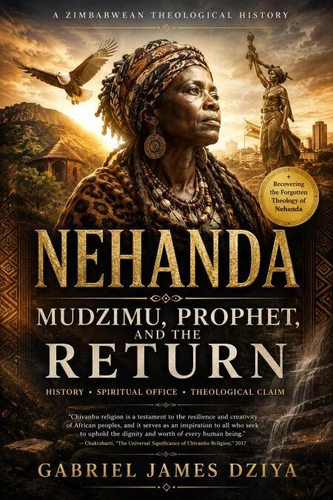
Every nation buries its prophets twice - once in the ground, and once in forgetting. Zimbabwe has never quite managed the second burial of Mbuya Nehanda. We know the political Nehanda: the freedom fighter whose name graces stamps, hospitals, and street signs, the Mother of the Nation cast in bronze at Harare's busiest intersection. But half her story has been lost - the theological half. Not merely a "spirit medium, " as colonial courts and textbooks insist on calling her, but a svikiro carrying a mhondoro, an ancestral saint whose authority reached back five centuries to the founding of the Munhumutapa state, and whose voice ultimately answered to Mwari Musikavanhu himself.
In this Zimbabwean theological history, Gabriel James Dziya - author of Mwari, Chivanhu & Christianity and The Elohim Enigma - recovers that lost half. He traces Charwe Nyakasikana's life from an ordinary daughter of the Hwata dynasty to the confirmed bearer of an ancient royal office; examines why "spirit medium" is a mistranslation that shaped how a colonial court, and history since, misunderstood her; asks where she rests today, and argues - carefully, historically, theologically - that the answer is Nyikadzimu, the land of the saints; and sets her story beside Deborah of Israel, a judge and prophetess raised up for an oppressed people in strikingly similar circumstances.
Along the way, this book confronts the double standard that let colonial missionaries dismiss oral tradition while carrying a Bible that was itself shaped by centuries of oral transmission and later editorial reshaping - and makes its boldest claim without apology: that Nehanda's promise of rising bones has already been fulfilled, not merely echoed, in the bronze that now stands lifted at the center of the capital.
This is not a book that asks Christians to set aside their faith. It is a book that asks whether the same God they worship was already at work among the Shona people long before any missionary arrived - and what it means to finally believe it.
Every nation buries its prophets twice - once in the ground, and once in forgetting. Zimbabwe has never quite managed the second burial of Mbuya Nehanda. We know the political Nehanda: the freedom fighter whose name graces stamps, hospitals, and street signs, the Mother of the Nation cast in bronze at Harare's busiest intersection. But half her story has been lost - the theological half. Not merely a "spirit medium, " as colonial courts and textbooks insist on calling her, but a svikiro carrying a mhondoro, an ancestral saint whose authority reached back five centuries to the founding of the Munhumutapa state, and whose voice ultimately answered to Mwari Musikavanhu himself.
In this Zimbabwean theological history, Gabriel James Dziya - author of Mwari, Chivanhu & Christianity and The Elohim Enigma - recovers that lost half. He traces Charwe Nyakasikana's life from an ordinary daughter of the Hwata dynasty to the confirmed bearer of an ancient royal office; examines why "spirit medium" is a mistranslation that shaped how a colonial court, and history since, misunderstood her; asks where she rests today, and argues - carefully, historically, theologically - that the answer is Nyikadzimu, the land of the saints; and sets her story beside Deborah of Israel, a judge and prophetess raised up for an oppressed people in strikingly similar circumstances.
Along the way, this book confronts the double standard that let colonial missionaries dismiss oral tradition while carrying a Bible that was itself shaped by centuries of oral transmission and later editorial reshaping - and makes its boldest claim without apology: that Nehanda's promise of rising bones has already been fulfilled, not merely echoed, in the bronze that now stands lifted at the center of the capital.
This is not a book that asks Christians to set aside their faith. It is a book that asks whether the same God they worship was already at work among the Shona people long before any missionary arrived - and what it means to finally believe it.

 , qui est-ce ?