
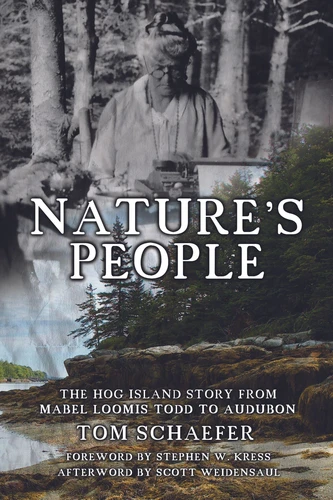
Nature's People: The Hog Island Story from Mabel Loomis Todd to Audubon
Par :Formats :
Disponible dans votre compte client Decitre ou Furet du Nord dès validation de votre commande. Le format ePub est :
- Compatible avec une lecture sur My Vivlio (smartphone, tablette, ordinateur)
- Compatible avec une lecture sur liseuses Vivlio
- Pour les liseuses autres que Vivlio, vous devez utiliser le logiciel Adobe Digital Edition. Non compatible avec la lecture sur les liseuses Kindle, Remarkable et Sony
 , qui est-ce ?
Notre partenaire de plateforme de lecture numérique où vous retrouverez l'ensemble de vos ebooks gratuitement
Pour en savoir plus sur nos ebooks, consultez notre aide en ligne ici
C'est si simple ! Lisez votre ebook avec l'app Vivlio sur votre tablette, mobile ou ordinateur :

- FormatePub
- ISBN978-1-959096-54-2
- EAN9781959096542
- Date de parution08/05/2023
- Protection num.pas de protection
- Infos supplémentairesepub
- ÉditeurPatrick Hand
Résumé
When Emily Dickinson died in 1886, her sister learned of a cache of unknown poems which she was determined to see published. In time the task fell to Mabel Loomis Todd, a socialite in town who just so happened to be having a long-term affair with the sisters' brother, Austin. It is because of Mabel Loomis Todd that we know Emily Dickinson today. While Dickinson scholars have parsed her contributions to Emily's portfolio of poems and letters, Mabel Todd's involvement in the nascent practice of preservation of natural places has gone largely unreported.
It was in 1908 when she signed papers for an undeveloped tract of an island in Muscongus Bay, Maine, where her family summered as rusticators for many years. Then through the foresight of her daughter Millicent Todd Bingham and the leadership of the National Audubon Society's John Baker, the island first hosted the Audubon Nature Camp for Adult Leaders in 1936. Over the decades, the summer endeavor has evolved into the historic Hog Island Audubon Camp, a worldwide landmark center of nature education and birding.
How all that came about it is the stuff of Nature's People.
It was in 1908 when she signed papers for an undeveloped tract of an island in Muscongus Bay, Maine, where her family summered as rusticators for many years. Then through the foresight of her daughter Millicent Todd Bingham and the leadership of the National Audubon Society's John Baker, the island first hosted the Audubon Nature Camp for Adult Leaders in 1936. Over the decades, the summer endeavor has evolved into the historic Hog Island Audubon Camp, a worldwide landmark center of nature education and birding.
How all that came about it is the stuff of Nature's People.
When Emily Dickinson died in 1886, her sister learned of a cache of unknown poems which she was determined to see published. In time the task fell to Mabel Loomis Todd, a socialite in town who just so happened to be having a long-term affair with the sisters' brother, Austin. It is because of Mabel Loomis Todd that we know Emily Dickinson today. While Dickinson scholars have parsed her contributions to Emily's portfolio of poems and letters, Mabel Todd's involvement in the nascent practice of preservation of natural places has gone largely unreported.
It was in 1908 when she signed papers for an undeveloped tract of an island in Muscongus Bay, Maine, where her family summered as rusticators for many years. Then through the foresight of her daughter Millicent Todd Bingham and the leadership of the National Audubon Society's John Baker, the island first hosted the Audubon Nature Camp for Adult Leaders in 1936. Over the decades, the summer endeavor has evolved into the historic Hog Island Audubon Camp, a worldwide landmark center of nature education and birding.
How all that came about it is the stuff of Nature's People.
It was in 1908 when she signed papers for an undeveloped tract of an island in Muscongus Bay, Maine, where her family summered as rusticators for many years. Then through the foresight of her daughter Millicent Todd Bingham and the leadership of the National Audubon Society's John Baker, the island first hosted the Audubon Nature Camp for Adult Leaders in 1936. Over the decades, the summer endeavor has evolved into the historic Hog Island Audubon Camp, a worldwide landmark center of nature education and birding.
How all that came about it is the stuff of Nature's People.