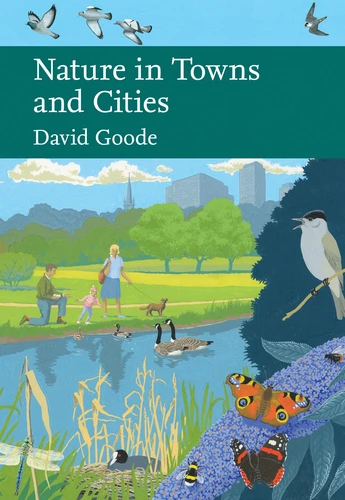
Nature in Towns and Cities
Par :Formats :
Disponible dans votre compte client Decitre ou Furet du Nord dès validation de votre commande. Le format ePub protégé est :
- Compatible avec une lecture sur My Vivlio (smartphone, tablette, ordinateur)
- Compatible avec une lecture sur liseuses Vivlio
- Pour les liseuses autres que Vivlio, vous devez utiliser le logiciel Adobe Digital Edition. Non compatible avec la lecture sur les liseuses Kindle, Remarkable et Sony
- Non compatible avec un achat hors France métropolitaine
 , qui est-ce ?
Notre partenaire de plateforme de lecture numérique où vous retrouverez l'ensemble de vos ebooks gratuitement
Pour en savoir plus sur nos ebooks, consultez notre aide en ligne ici
C'est si simple ! Lisez votre ebook avec l'app Vivlio sur votre tablette, mobile ou ordinateur :

- Nombre de pages464
- FormatePub
- ISBN978-0-00-755619-9
- EAN9780007556199
- Date de parution23/10/2014
- Protection num.Adobe DRM
- Infos supplémentairesepub
- ÉditeurWilliam Collins
Résumé
The latest in the New Naturalist series documents the parks and green spaces unique to Britain's cities - and the wildlife that has flourished in these habitats.
Not since Richard Fitter's landmark publication in 1945, 'London's Natural History' - volume 3 in the New Naturalist series - has there been a comprehensive guide to urban natural history. Since then there have been major advances in the conservation of nature in our towns and cities, and there is even more to say about how animals and plants have adapted, in varying degrees, to urbanisation.
But this is not merely an exploration of natural history within the urban environment - David Goode uses his knowledge of urban ecology to describe the range of habitats and species which exist within urban areas, and shows how our understanding is being applied to encourage a greater variety of nature into towns and cities.
He illustrates how an ecological approach can be incorporated within planning and design to create a range of habitats from tiny oases to extensive new urban woodland and wetlands.
He illustrates how an ecological approach can be incorporated within planning and design to create a range of habitats from tiny oases to extensive new urban woodland and wetlands.