SOLDES
Jusqu'à -70% sur une sélection d'articles*

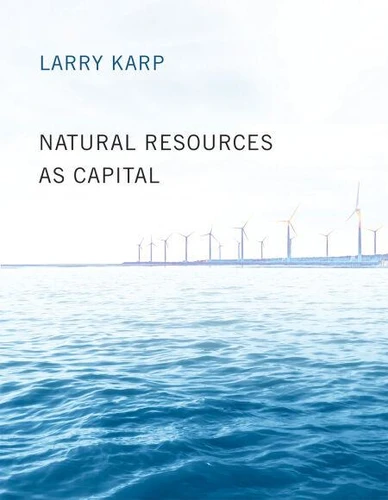
Natural Resources as Capital
Par :Formats :
Disponible dans votre compte client Decitre ou Furet du Nord dès validation de votre commande. Le format ePub protégé est :
- Compatible avec une lecture sur My Vivlio (smartphone, tablette, ordinateur)
- Compatible avec une lecture sur liseuses Vivlio
- Pour les liseuses autres que Vivlio, vous devez utiliser le logiciel Adobe Digital Edition. Non compatible avec la lecture sur les liseuses Kindle, Remarkable et Sony
- Non compatible avec un achat hors France métropolitaine
 , qui est-ce ?
Notre partenaire de plateforme de lecture numérique où vous retrouverez l'ensemble de vos ebooks gratuitement
Pour en savoir plus sur nos ebooks, consultez notre aide en ligne ici
C'est si simple ! Lisez votre ebook avec l'app Vivlio sur votre tablette, mobile ou ordinateur :

- Nombre de pages432
- FormatePub
- ISBN978-0-262-34145-5
- EAN9780262341455
- Date de parution24/11/2017
- Protection num.Adobe DRM
- Taille12 Mo
- Infos supplémentairesepub
- ÉditeurThe MIT Press
Résumé
An introduction to the concepts and tools of natural resource economics, including dynamic models, market failures, and institutional remedies. This introduction to natural resource economics treats resources as a type of capital; their management is an investment problem requiring forward-looking behavior within a dynamic setting. Market failures are widespread, often associated with incomplete or nonexistent property rights, complicated by policy failures.
The book covers standard resource economics topics, including both the Hotelling model for nonrenewable resources and models for renewable resources. The book also includes some topics in environmental economics that overlap with natural resource economics, including climate change. The text emphasizes skills and intuition needed to think about dynamic models and institutional remedies in the presence of both market and policy failures.
It presents the nuts and bolts of resource economics as applied to nonrenewable resources, including the two-period model, stock-dependent costs, and resource scarcity. The chapters on renewable resources cover such topics as property rights as an alternative to regulation, the growth function, steady states, and maximum sustainable yield, using fisheries as a concrete setting. Other, less standard, topics covered include microeconomic issues such as arbitrage and the use of discounting; policy problems including the "Green Paradox"; foundations for policy analysis when market failures are important; and taxation.
Appendixes offer reviews of the relevant mathematics. The book is suitable for use by upper-level undergraduates or, with the appendixes, masters-level courses.
The book covers standard resource economics topics, including both the Hotelling model for nonrenewable resources and models for renewable resources. The book also includes some topics in environmental economics that overlap with natural resource economics, including climate change. The text emphasizes skills and intuition needed to think about dynamic models and institutional remedies in the presence of both market and policy failures.
It presents the nuts and bolts of resource economics as applied to nonrenewable resources, including the two-period model, stock-dependent costs, and resource scarcity. The chapters on renewable resources cover such topics as property rights as an alternative to regulation, the growth function, steady states, and maximum sustainable yield, using fisheries as a concrete setting. Other, less standard, topics covered include microeconomic issues such as arbitrage and the use of discounting; policy problems including the "Green Paradox"; foundations for policy analysis when market failures are important; and taxation.
Appendixes offer reviews of the relevant mathematics. The book is suitable for use by upper-level undergraduates or, with the appendixes, masters-level courses.