SOLDES
Jusqu'à -70% sur une sélection d'articles*

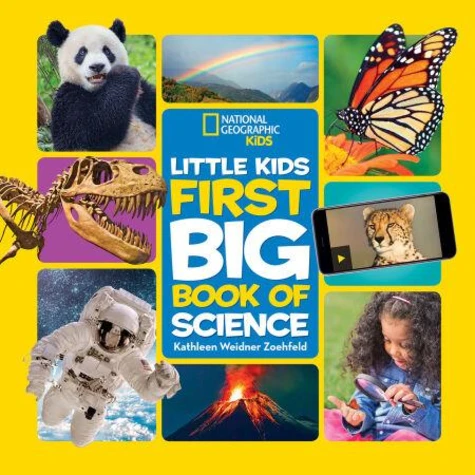
National Geographic Little Kids First Big Book of Science
Par :Formats :
Disponible dans votre compte client Decitre ou Furet du Nord dès validation de votre commande. Le format Epub fixed layout protégé est :
- Compatible avec une lecture sur My Vivlio (smartphone, tablette, ordinateur)
- Compatible avec une lecture sur liseuses Vivlio
- Pour les liseuses autres que Vivlio, vous devez utiliser le logiciel Adobe Digital Edition. Non compatible avec la lecture sur les liseuses Kindle, Remarkable et Sony
- Non compatible avec un achat hors France métropolitaine
 , qui est-ce ?
Notre partenaire de plateforme de lecture numérique où vous retrouverez l'ensemble de vos ebooks gratuitement
Pour en savoir plus sur nos ebooks, consultez notre aide en ligne ici
C'est si simple ! Lisez votre ebook avec l'app Vivlio sur votre tablette, mobile ou ordinateur :

- Nombre de pages128
- FormatEpub fixed layout
- ISBN978-1-4263-3320-0
- EAN9781426333200
- Date de parution26/03/2019
- Protection num.Adobe DRM
- Taille140 Mo
- Infos supplémentairesepub
- ÉditeurNational Geographic Kids
Résumé
This lively introduction to the fascinating world of science explores the different kinds of science, what scientists do, and the amazing things that scientists study: animals and plants; oceans and space; earthquakes and volcanoes; sound and light; inventions and more!Make sure kids' first experience of the wonders of science is a thrilling eye-opener with this fun reference book. Fun activities, games, and simple experiments encourage interactive learning, showing kids that anyone can use scientific observation and experimentation to be a scientist and discover new things.
With bright images and age-appropriate text, this book inspires kids to be curious, ask questions, and explore the world around them and maybe even grow up to be a scientist one day, too! Topics include astronomy, botany, paleontology, malacology (that's the science of clams, snails, and other animals with shells!), zoology, and more.
With bright images and age-appropriate text, this book inspires kids to be curious, ask questions, and explore the world around them and maybe even grow up to be a scientist one day, too! Topics include astronomy, botany, paleontology, malacology (that's the science of clams, snails, and other animals with shells!), zoology, and more.