
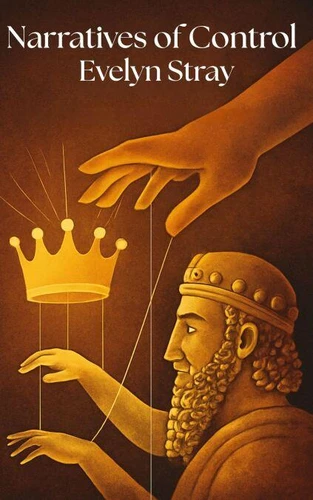
Narratives of Control. HISTORY, #1
Par : ,Formats :
Disponible dans votre compte client Decitre ou Furet du Nord dès validation de votre commande. Le format ePub est :
- Compatible avec une lecture sur My Vivlio (smartphone, tablette, ordinateur)
- Compatible avec une lecture sur liseuses Vivlio
- Pour les liseuses autres que Vivlio, vous devez utiliser le logiciel Adobe Digital Edition. Non compatible avec la lecture sur les liseuses Kindle, Remarkable et Sony
 , qui est-ce ?
Notre partenaire de plateforme de lecture numérique où vous retrouverez l'ensemble de vos ebooks gratuitement
Pour en savoir plus sur nos ebooks, consultez notre aide en ligne ici
C'est si simple ! Lisez votre ebook avec l'app Vivlio sur votre tablette, mobile ou ordinateur :

- FormatePub
- ISBN8232629793
- EAN9798232629793
- Date de parution21/10/2025
- Protection num.pas de protection
- Infos supplémentairesepub
- ÉditeurDraft2Digital
Résumé
Evelyn Stray's work delves into the role of narratives in shaping power structures, from ancient mythologies to modern religions and political systems. Stray reveals how stories, whether through divine kingship or the concept of submission, have been instrumental in establishing and maintaining societal hierarchies. The Epic of Gilgamesh serves as an early example, where the story of Gilgamesh, a king who is two-thirds god, solidifies the idea of divine authority.
The narrative depicts his journey from a tyrannical ruler to a more reflective one, illustrating the complexities of power and its necessity in maintaining societal order. In this epic, the portrayal of Gilgamesh's relationship with the gods and his subjects reinforces the divine legitimacy of kingship, a concept that resonated throughout ancient Mesopotamian society. Similarly, Egyptian mythology centers on the divine nature of pharaohs, positioning them as mediators between gods and men.
The power of the pharaoh, legitimized through rituals and monumental architecture, was a tool for social control. Stories like that of Osiris and Horus not only affirmed the pharaoh's authority but also reinforced social and cosmic order. The visual arts, like the colossal statues of pharaohs, further bolstered this divine image, constantly reminding the public of their ruler's supremacy. Greek mythology, while focusing on individual heroes like Odysseus and Hercules, also served to reinforce the broader societal order.
The Odyssey emphasizes the patriarchal ideals of leadership and the submission of chaotic forces to maintain order. Odysseus's journey, although filled with personal triumphs, ultimately underscores the importance of masculine authority and the restoration of societal stability. The narrative of Hercules, through his twelve labors, similarly portrays the subjugation of disorder, reinforcing the societal need for strength and control.
Stray transitions from these ancient mythologies to the Abrahamic religions, where the narratives of divine authority evolve. In Judaism, Christianity, and Islam, the concept of submission to God's will becomes central. In Christianity, the narrative of salvation through Jesus introduces a divine framework that not only governs spiritual life but also influences societal norms, often reinforcing hierarchical structures.
Similarly, the Quran emphasizes submission to God's will, with the Prophet Muhammad's teachings shaping political and social structures, further consolidating religious authority as a mechanism for societal control. This narrative control, however, isn't solely an ancient phenomenon. The Enlightenment's emphasis on reason and progress served to justify European colonialism, framing non-Western societies as "irrational" and in need of Western "civilization." This narrative of progress masked the brutal realities of colonization and served to justify the exploitation of other cultures.
The Industrial Revolution further exemplifies how the narrative of progress can be used to legitimize social inequalities. While the narrative of technological advancement promised a brighter future, it concealed the exploitation of labor and environmental degradation. The seemingly objective pursuit of economic growth masked the concentration of power and wealth in the hands of a few, perpetuating societal and ecological damage.
The narrative depicts his journey from a tyrannical ruler to a more reflective one, illustrating the complexities of power and its necessity in maintaining societal order. In this epic, the portrayal of Gilgamesh's relationship with the gods and his subjects reinforces the divine legitimacy of kingship, a concept that resonated throughout ancient Mesopotamian society. Similarly, Egyptian mythology centers on the divine nature of pharaohs, positioning them as mediators between gods and men.
The power of the pharaoh, legitimized through rituals and monumental architecture, was a tool for social control. Stories like that of Osiris and Horus not only affirmed the pharaoh's authority but also reinforced social and cosmic order. The visual arts, like the colossal statues of pharaohs, further bolstered this divine image, constantly reminding the public of their ruler's supremacy. Greek mythology, while focusing on individual heroes like Odysseus and Hercules, also served to reinforce the broader societal order.
The Odyssey emphasizes the patriarchal ideals of leadership and the submission of chaotic forces to maintain order. Odysseus's journey, although filled with personal triumphs, ultimately underscores the importance of masculine authority and the restoration of societal stability. The narrative of Hercules, through his twelve labors, similarly portrays the subjugation of disorder, reinforcing the societal need for strength and control.
Stray transitions from these ancient mythologies to the Abrahamic religions, where the narratives of divine authority evolve. In Judaism, Christianity, and Islam, the concept of submission to God's will becomes central. In Christianity, the narrative of salvation through Jesus introduces a divine framework that not only governs spiritual life but also influences societal norms, often reinforcing hierarchical structures.
Similarly, the Quran emphasizes submission to God's will, with the Prophet Muhammad's teachings shaping political and social structures, further consolidating religious authority as a mechanism for societal control. This narrative control, however, isn't solely an ancient phenomenon. The Enlightenment's emphasis on reason and progress served to justify European colonialism, framing non-Western societies as "irrational" and in need of Western "civilization." This narrative of progress masked the brutal realities of colonization and served to justify the exploitation of other cultures.
The Industrial Revolution further exemplifies how the narrative of progress can be used to legitimize social inequalities. While the narrative of technological advancement promised a brighter future, it concealed the exploitation of labor and environmental degradation. The seemingly objective pursuit of economic growth masked the concentration of power and wealth in the hands of a few, perpetuating societal and ecological damage.
A propos de TAAAM ABDELMAJID

8,99 €

6,99 €

4,49 €