Viktoria Pötzl is Associate Professor of German-Jewish Studies at Grinnell College.
Katharina Wiedlack is Assistant Professor of Anglophone Cultural Studies at the University of Vienna.
Nouveauté
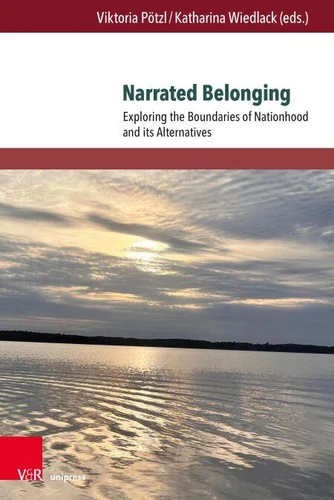
Narrated Belonging. Exploring the Boundaries of Nationhood and its Alternatives
Par : ,Formats :
Disponible dans votre compte client Decitre ou Furet du Nord dès validation de votre commande. Le format PDF est :
- Compatible avec une lecture sur My Vivlio (smartphone, tablette, ordinateur)
- Compatible avec une lecture sur liseuses Vivlio
- Pour les liseuses autres que Vivlio, vous devez utiliser le logiciel Adobe Digital Edition. Non compatible avec la lecture sur les liseuses Kindle, Remarkable et Sony
 , qui est-ce ?
Notre partenaire de plateforme de lecture numérique où vous retrouverez l'ensemble de vos ebooks gratuitement
Pour en savoir plus sur nos ebooks, consultez notre aide en ligne ici
C'est si simple ! Lisez votre ebook avec l'app Vivlio sur votre tablette, mobile ou ordinateur :

- Nombre de pages154
- FormatPDF
- ISBN978-3-8470-1867-4
- EAN9783847018674
- Date de parution10/08/2026
- Protection num.pas de protection
- Taille5 Mo
- Infos supplémentairespdf
- ÉditeurV&R Unipress
Résumé
This volume explores the complexities and variations of the nation and examines its transformative potential within the broad field of literary studies through various literary works, including fiction, autobiography, poetry, and theater. The authors address phenomena such as global capitalist exploitation, and its conjunction with other forms of violence, including colonialism, racism, sexism, xenophobia, and white supremacy.
They engage with literary texts and film that reflect on, and disseminate, both hegemonic and, importantly, counterhegemonic discourses across the 19th, 20th, and 21st centuries. Each chapter engages with productions that speak from minoritarian and/or racially oppressed perspectives, including works representing Black American transnationalism, perspectives of refugees of color, immigrant and Palestinian voices, Romani positionalities, and Caribbean diasporic perspectives.
Focusing on these cultural texts, our authors examine the effects of, as well as resistance to, a variety of vectors of oppression. These include U. S.-American anti-Black racism and anti-migrantism, in connection with the exploitation of the working class; European anti-Roma violence; 20th-century Zionism; the violence of European border regimes; and forced migration and the segregation of refugees into camps.
They engage with literary texts and film that reflect on, and disseminate, both hegemonic and, importantly, counterhegemonic discourses across the 19th, 20th, and 21st centuries. Each chapter engages with productions that speak from minoritarian and/or racially oppressed perspectives, including works representing Black American transnationalism, perspectives of refugees of color, immigrant and Palestinian voices, Romani positionalities, and Caribbean diasporic perspectives.
Focusing on these cultural texts, our authors examine the effects of, as well as resistance to, a variety of vectors of oppression. These include U. S.-American anti-Black racism and anti-migrantism, in connection with the exploitation of the working class; European anti-Roma violence; 20th-century Zionism; the violence of European border regimes; and forced migration and the segregation of refugees into camps.