SOLDES
Jusqu'à -70% sur une sélection d'articles*

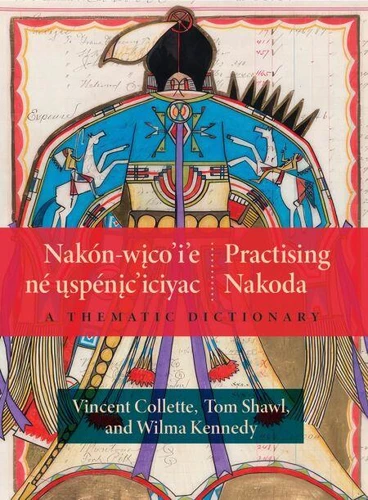
Nakón-wico’i’e né uspénic’iciyac / Practising Nakoda. A Thematic Dictionary
Par : , ,Formats :
Disponible dans votre compte client Decitre ou Furet du Nord dès validation de votre commande. Le format ePub est :
- Compatible avec une lecture sur My Vivlio (smartphone, tablette, ordinateur)
- Compatible avec une lecture sur liseuses Vivlio
- Pour les liseuses autres que Vivlio, vous devez utiliser le logiciel Adobe Digital Edition. Non compatible avec la lecture sur les liseuses Kindle, Remarkable et Sony
 , qui est-ce ?
Notre partenaire de plateforme de lecture numérique où vous retrouverez l'ensemble de vos ebooks gratuitement
Pour en savoir plus sur nos ebooks, consultez notre aide en ligne ici
C'est si simple ! Lisez votre ebook avec l'app Vivlio sur votre tablette, mobile ou ordinateur :

- Nombre de pages216
- FormatePub
- ISBN978-1-77940-021-5
- EAN9781779400215
- Date de parution15/10/2024
- Protection num.Digital Watermarking
- Taille4 Mo
- Infos supplémentairesepub
- ÉditeurUniversity of Regina Press
Résumé
A user-friendly guide that teaches core Nakoda vocabulary and how to use it in conversationPractising Nakoda contains basic Nakoda vocabulary, organized into 30 themes (such as animals, clothing, directions, and time) and divided into sections meant to enhance daily and ceremonial communication (including dances, ceremonies, and ceremonial clothing). The guide provides words for every theme from which the reader can forge a general view of word formation patterns.
In a thematic dictionary, words are not organized alphabetically but are grouped according to the root element or their meaning. Since Nakoda is a polysynthetic language where words are often built up with many elements that attach to the root, this is a necessary format that enhances the learner's "morphological awareness." The guide will help learners identify the root of each word, along with the "morphemes, " critical to the successful learning of the Nakoda language, and the comprehension of complex vocabulary.
In a thematic dictionary, words are not organized alphabetically but are grouped according to the root element or their meaning. Since Nakoda is a polysynthetic language where words are often built up with many elements that attach to the root, this is a necessary format that enhances the learner's "morphological awareness." The guide will help learners identify the root of each word, along with the "morphemes, " critical to the successful learning of the Nakoda language, and the comprehension of complex vocabulary.
A propos de Vincent Collette
13,99 €