SOLDES
Jusqu'à -70% sur une sélection d'articles*

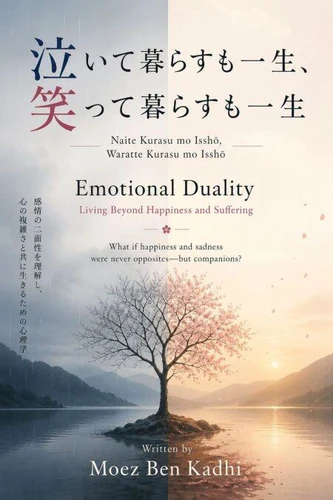
Naite Kurasu mo Isshō, Waratte Kurasu mo Isshō
Par :Formats :
Disponible dans votre compte client Decitre ou Furet du Nord dès validation de votre commande. Le format ePub est :
- Compatible avec une lecture sur My Vivlio (smartphone, tablette, ordinateur)
- Compatible avec une lecture sur liseuses Vivlio
- Pour les liseuses autres que Vivlio, vous devez utiliser le logiciel Adobe Digital Edition. Non compatible avec la lecture sur les liseuses Kindle, Remarkable et Sony
 , qui est-ce ?
Notre partenaire de plateforme de lecture numérique où vous retrouverez l'ensemble de vos ebooks gratuitement
Pour en savoir plus sur nos ebooks, consultez notre aide en ligne ici
C'est si simple ! Lisez votre ebook avec l'app Vivlio sur votre tablette, mobile ou ordinateur :

- FormatePub
- ISBN8235678545
- EAN9798235678545
- Date de parution01/05/2026
- Protection num.pas de protection
- Infos supplémentairesepub
- ÉditeurIoakim Ioakim
Résumé
Whether we live in tears or in laughter, a lifetime remains the same. At first glance, this idea feels almost too simple, perhaps even obvious. Life moves forward regardless of how we feel. Days pass, time unfolds, and the world continues its rhythm without waiting for our emotions to catch up. And yet, within this simplicity lies a quiet, unsettling truth: if life does not change based on our emotional state, then the way we experience it becomes our most important responsibility.
We often grow up believing that happiness and suffering exist as opposites. We are taught, directly or indirectly, that a good life is one in which pain is minimized and happiness is maximized. Sadness is something to overcome, fear something to silence, and discomfort something to avoid. In this framework, emotions are treated like problems to solve rather than realities to understand. But lived experience tells a different story.
There are moments when joy and sorrow appear together, inseparable. A farewell filled with gratitude. A success shadowed by emptiness. A quiet evening where peace and loneliness coexist without contradiction. These are not rare exceptions, they are the texture of human life. Yet we rarely have the language or the framework to make sense of them. This book begins with a simple but transformative premise: we do not experience emotions one at a time, we experience them in layers.
Pain does not cancel out happiness. Happiness does not erase pain. Instead, they exist simultaneously, shaping how we see ourselves, others, and the world around us. Ignoring this complexity often leads to frustration, the feeling that something is wrong because we are not purely happy, or not fully healed.
We often grow up believing that happiness and suffering exist as opposites. We are taught, directly or indirectly, that a good life is one in which pain is minimized and happiness is maximized. Sadness is something to overcome, fear something to silence, and discomfort something to avoid. In this framework, emotions are treated like problems to solve rather than realities to understand. But lived experience tells a different story.
There are moments when joy and sorrow appear together, inseparable. A farewell filled with gratitude. A success shadowed by emptiness. A quiet evening where peace and loneliness coexist without contradiction. These are not rare exceptions, they are the texture of human life. Yet we rarely have the language or the framework to make sense of them. This book begins with a simple but transformative premise: we do not experience emotions one at a time, we experience them in layers.
Pain does not cancel out happiness. Happiness does not erase pain. Instead, they exist simultaneously, shaping how we see ourselves, others, and the world around us. Ignoring this complexity often leads to frustration, the feeling that something is wrong because we are not purely happy, or not fully healed.