SOLDES
Jusqu'à -70% sur une sélection d'articles*

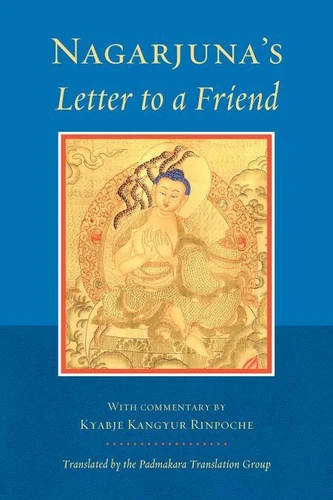
Nagarjuna's Letter to a Friend. With Commentary By Kangyur Rinpoche
Par :Formats :
Disponible dans votre compte client Decitre ou Furet du Nord dès validation de votre commande. Le format ePub protégé est :
- Compatible avec une lecture sur My Vivlio (smartphone, tablette, ordinateur)
- Compatible avec une lecture sur liseuses Vivlio
- Pour les liseuses autres que Vivlio, vous devez utiliser le logiciel Adobe Digital Edition. Non compatible avec la lecture sur les liseuses Kindle, Remarkable et Sony
- Non compatible avec un achat hors France métropolitaine
 , qui est-ce ?
Notre partenaire de plateforme de lecture numérique où vous retrouverez l'ensemble de vos ebooks gratuitement
Pour en savoir plus sur nos ebooks, consultez notre aide en ligne ici
C'est si simple ! Lisez votre ebook avec l'app Vivlio sur votre tablette, mobile ou ordinateur :

- Nombre de pages200
- FormatePub
- ISBN1-55939-850-7
- EAN9781559398503
- Date de parution18/01/2006
- Protection num.Adobe DRM
- Taille3 Mo
- Infos supplémentairesepub
- ÉditeurSnow Lion
Résumé
The great Indian Buddhist master Nagarjuna wrote his celebrated poem Letter to a Friend as a gift of advice to a South Indian king, and it has since become a monument in the Indian shastra tradition. Despite its short length (only 123 verses), it covers the entire Mahayana path, combining a practical approach to daily conduct with a theoretical exposition of the different stages leading to enlightenment.
It has thus been an ideal source for many of Tibet's greatest scholars seeking a scriptural authority to enhance their own descriptions of the Buddhist path. In addition to a new English translation of the poem followed by the original Tibetan, this book includes commentary and a structural outline by the great twentieth-century scholar Kyabje Kangyur Rinpoche.
It has thus been an ideal source for many of Tibet's greatest scholars seeking a scriptural authority to enhance their own descriptions of the Buddhist path. In addition to a new English translation of the poem followed by the original Tibetan, this book includes commentary and a structural outline by the great twentieth-century scholar Kyabje Kangyur Rinpoche.