
Patrick Grant, professor emeritus of English at the University of Victoria, is best known for his studies on literature and religion. He is the author, most recently, of Imperfection and of Literature, Rhetoric, and Violence in Northern Ireland, 1968-98.
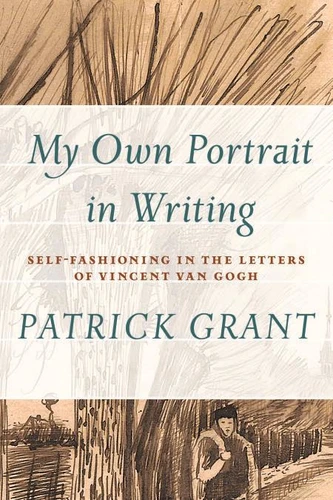
"My Own Portrait in Writing". Self-Fashioning in the Letters of Vincent van Gogh
Par :Formats :
Disponible dans votre compte client Decitre ou Furet du Nord dès validation de votre commande. Le format ePub est :
- Compatible avec une lecture sur My Vivlio (smartphone, tablette, ordinateur)
- Compatible avec une lecture sur liseuses Vivlio
- Pour les liseuses autres que Vivlio, vous devez utiliser le logiciel Adobe Digital Edition. Non compatible avec la lecture sur les liseuses Kindle, Remarkable et Sony
 , qui est-ce ?
Notre partenaire de plateforme de lecture numérique où vous retrouverez l'ensemble de vos ebooks gratuitement
Pour en savoir plus sur nos ebooks, consultez notre aide en ligne ici
C'est si simple ! Lisez votre ebook avec l'app Vivlio sur votre tablette, mobile ou ordinateur :

- Nombre de pages220
- FormatePub
- ISBN978-1-77199-060-8
- EAN9781771990608
- Date de parution01/05/2015
- Protection num.Digital Watermarking
- Taille5 Mo
- Infos supplémentairesepub
- ÉditeurAU Press
Résumé
Art historians, biographers, and other researchers have long drawn on Van Gogh's voluminous correspondence-more than eight hundred letters-for insights into both his personal struggles and his art. But the letters, while often admired for their literary quality, have rarely been approached as literature. In this volume, Patrick Grant sets out to explore the question, "By what criteria do we judge Van Gogh's letters to be, specifically, literary?" Drawing, especially, on Mikhail Bakhtin's conceptualization of self-awareness as an ongoing dialogue between "self" and "other, " Grant examines the ways in which Van Gogh's letters raise, from within themselves, questions and issues to which they also respond.
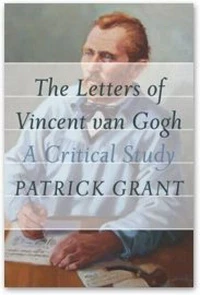
Their literary quality, he argues, derives in part from this "double-voiced discourse"-from the power of the letters to thematize, through their own internal dialogues, the very structure of self-fashioning itself. Far from merely reproducing the narrative of the artist's personal progress, "the letters enable readers to recognize how necessary yet open-ended, constrained yet liberating, confined yet unpredictable, are the means by which people seek to shape a place for themselves in the world." This volume builds on Grant's earlier analysis of Van Gogh's correspondence, The Letters of Vincent van Gogh: A Critical Study (AU Press, 2014), a study in which he approached the letters from a literary critical standpoint, delving into key patterns of metaphors and concepts.
In the present volume, he provides instead a literary theoretical analysis of the letters, one that draws them more fully into the domain of modern literary studies. In his deft and keenly perceptive reading, Grant deconstructs the binaries that surface in both Van Gogh's writing and painting, discusses the narrative dimensions of the letter-sketches and the recurring themes of fantasy, belief, and self-surrender, and draws attention to Van Gogh's own understanding of the permeable boundary between words and visual art.
Viewing the letters as an integrated body of discourse, "My Own Portrait in Writing" offers a theoretically informed interpretation of Van Gogh's literary achievement that is, quite literally, without precedent.
Their literary quality, he argues, derives in part from this "double-voiced discourse"-from the power of the letters to thematize, through their own internal dialogues, the very structure of self-fashioning itself. Far from merely reproducing the narrative of the artist's personal progress, "the letters enable readers to recognize how necessary yet open-ended, constrained yet liberating, confined yet unpredictable, are the means by which people seek to shape a place for themselves in the world." This volume builds on Grant's earlier analysis of Van Gogh's correspondence, The Letters of Vincent van Gogh: A Critical Study (AU Press, 2014), a study in which he approached the letters from a literary critical standpoint, delving into key patterns of metaphors and concepts.
In the present volume, he provides instead a literary theoretical analysis of the letters, one that draws them more fully into the domain of modern literary studies. In his deft and keenly perceptive reading, Grant deconstructs the binaries that surface in both Van Gogh's writing and painting, discusses the narrative dimensions of the letter-sketches and the recurring themes of fantasy, belief, and self-surrender, and draws attention to Van Gogh's own understanding of the permeable boundary between words and visual art.
Viewing the letters as an integrated body of discourse, "My Own Portrait in Writing" offers a theoretically informed interpretation of Van Gogh's literary achievement that is, quite literally, without precedent.
A propos de Patrick Grant
18,99 €
Imperfection
E-book
16,99 €