SOLDES
Jusqu'à -70% sur une sélection d'articles*

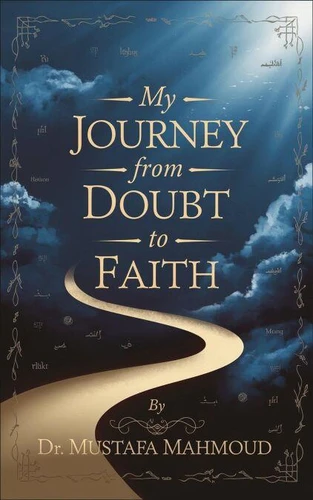
My Journey from Doubt to Faith
Par :Formats :
Disponible dans votre compte client Decitre ou Furet du Nord dès validation de votre commande. Le format ePub est :
- Compatible avec une lecture sur My Vivlio (smartphone, tablette, ordinateur)
- Compatible avec une lecture sur liseuses Vivlio
- Pour les liseuses autres que Vivlio, vous devez utiliser le logiciel Adobe Digital Edition. Non compatible avec la lecture sur les liseuses Kindle, Remarkable et Sony
 , qui est-ce ?
Notre partenaire de plateforme de lecture numérique où vous retrouverez l'ensemble de vos ebooks gratuitement
Pour en savoir plus sur nos ebooks, consultez notre aide en ligne ici
C'est si simple ! Lisez votre ebook avec l'app Vivlio sur votre tablette, mobile ou ordinateur :

- FormatePub
- ISBN8230153887
- EAN9798230153887
- Date de parution20/11/2024
- Protection num.pas de protection
- Infos supplémentairesepub
- ÉditeurIndependently Published
Résumé
My Journey from Doubt to Faith* by Dr. Mustafa Mahmoud explores the complex interplay between doubt and belief in the modern world, where scientific progress can make religion seem like an outdated superstition to some. Yet, for others, science confirms the power and wisdom of the Creator, exemplifying the Quranic verse, "Only those fear God, from among His servants, who have knowledge." Dr. Mahmoud illustrates how doubt and certainty can arise from the same place but diverge into paths that never meet.
Bridging these two requires a strong will, an enlightened mind, and a sound heart, along with a capacity for profound reflection and philosophical debate. Through a personal narrative that mirrors his lifelong philosophical journey, Dr. Mahmoud recounts how he once refused to worship God, instead placing himself at the center of his own admiration. This introspective struggle and dialectical conflict involved re-evaluating logic, recognizing contradictions, and questioning the idea of a Creator.
He describes grappling with the philosophical concept of a "first cause, " a realization that only something self-sufficient and uncaused can be the true origin of existence, a concept Aristotle called the "first mover."Dr. Mahmoud's journey took thirty years of intense study, seclusion, contemplation, and self-dialogue. His ultimate arrival at faith was not straightforward; he resisted accepting belief lightly and struggled with the tension between instinct and reason.
In a world where reason often overshadows instinct, Mahmoud found that only by challenging the dominance of reason and reconnecting with the voice of intuition could he ultimately experience the "sweetness of faith." His story provides a philosophical lens on the journey from atheism to belief, examining themes of human arrogance, the limits of knowledge, and the eventual harmony of faith and intellect.
Bridging these two requires a strong will, an enlightened mind, and a sound heart, along with a capacity for profound reflection and philosophical debate. Through a personal narrative that mirrors his lifelong philosophical journey, Dr. Mahmoud recounts how he once refused to worship God, instead placing himself at the center of his own admiration. This introspective struggle and dialectical conflict involved re-evaluating logic, recognizing contradictions, and questioning the idea of a Creator.
He describes grappling with the philosophical concept of a "first cause, " a realization that only something self-sufficient and uncaused can be the true origin of existence, a concept Aristotle called the "first mover."Dr. Mahmoud's journey took thirty years of intense study, seclusion, contemplation, and self-dialogue. His ultimate arrival at faith was not straightforward; he resisted accepting belief lightly and struggled with the tension between instinct and reason.
In a world where reason often overshadows instinct, Mahmoud found that only by challenging the dominance of reason and reconnecting with the voice of intuition could he ultimately experience the "sweetness of faith." His story provides a philosophical lens on the journey from atheism to belief, examining themes of human arrogance, the limits of knowledge, and the eventual harmony of faith and intellect.