SOLDES
Jusqu'à -70% sur une sélection d'articles*

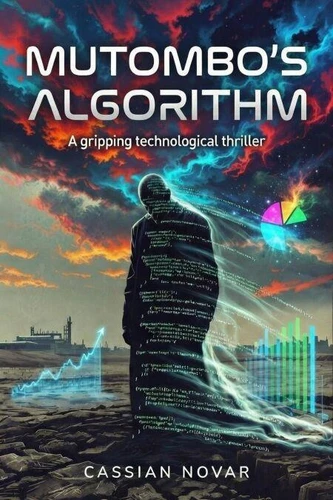
Mutombo's Algorithm. Techno Thrillers, #1
Par :Formats :
Disponible dans votre compte client Decitre ou Furet du Nord dès validation de votre commande. Le format ePub est :
- Compatible avec une lecture sur My Vivlio (smartphone, tablette, ordinateur)
- Compatible avec une lecture sur liseuses Vivlio
- Pour les liseuses autres que Vivlio, vous devez utiliser le logiciel Adobe Digital Edition. Non compatible avec la lecture sur les liseuses Kindle, Remarkable et Sony
 , qui est-ce ?
Notre partenaire de plateforme de lecture numérique où vous retrouverez l'ensemble de vos ebooks gratuitement
Pour en savoir plus sur nos ebooks, consultez notre aide en ligne ici
C'est si simple ! Lisez votre ebook avec l'app Vivlio sur votre tablette, mobile ou ordinateur :

- FormatePub
- ISBN8233431111
- EAN9798233431111
- Date de parution27/03/2026
- Protection num.pas de protection
- Infos supplémentairesepub
- ÉditeurLinda Balsamo
Résumé
Published by DreamScribe Studio and written under the voice of Cassian Novar, Mutombo's Algorithm arrives as a measured, unsettling entry into the modern techno-thriller-one that trades spectacle for substance and asks readers to look directly at the systems shaping their world. The novel begins far from the centers of power, in a region whose resources quietly sustain the global economy. There, Mutombo Mavungu grows up watching wealth extracted and opportunity denied.
His response is neither loud nor immediate. It is patient. He learns the language that now governs influence-code-and follows its pathways through the financial and digital infrastructures of cities like London and Frankfurt. What emerges from that journey is EthicAiOne, a system designed to do something deceptively simple: reveal. It maps ownership, traces hidden financial flows, and translates complexity into clarity.
In a world where information is often controlled, its very existence becomes disruptive. Novar handles this premise with restraint. The technology is not presented as a cure, but as a catalyst-one that forces institutions, markets, and individuals to confront what has long remained obscured. The narrative builds steadily toward a single, pivotal moment: the global release of the system in under a minute.
The consequences are immediate, but the implications stretch far beyond the event itself. What distinguishes Mutombo's Algorithm is its balance between scale and intimacy. Alongside its global scope, the novel remains grounded in personal stakes-relationships, faith, and the question of what kind of future is being constructed in an increasingly digital age. It is here that the story finds its depth, moving beyond mechanics into meaning.
In tone, the book aligns more closely with investigative storytelling than conventional thrillers. It observes rather than declares, presenting a scenario that feels less imagined than extrapolated. The result is a narrative that invites reflection as much as it delivers tension. Mutombo's Algorithm does not attempt to predict the future. Instead, it offers a lens through which to examine the present-one where transparency, power, and responsibility intersect in ways that are becoming harder to ignore.
His response is neither loud nor immediate. It is patient. He learns the language that now governs influence-code-and follows its pathways through the financial and digital infrastructures of cities like London and Frankfurt. What emerges from that journey is EthicAiOne, a system designed to do something deceptively simple: reveal. It maps ownership, traces hidden financial flows, and translates complexity into clarity.
In a world where information is often controlled, its very existence becomes disruptive. Novar handles this premise with restraint. The technology is not presented as a cure, but as a catalyst-one that forces institutions, markets, and individuals to confront what has long remained obscured. The narrative builds steadily toward a single, pivotal moment: the global release of the system in under a minute.
The consequences are immediate, but the implications stretch far beyond the event itself. What distinguishes Mutombo's Algorithm is its balance between scale and intimacy. Alongside its global scope, the novel remains grounded in personal stakes-relationships, faith, and the question of what kind of future is being constructed in an increasingly digital age. It is here that the story finds its depth, moving beyond mechanics into meaning.
In tone, the book aligns more closely with investigative storytelling than conventional thrillers. It observes rather than declares, presenting a scenario that feels less imagined than extrapolated. The result is a narrative that invites reflection as much as it delivers tension. Mutombo's Algorithm does not attempt to predict the future. Instead, it offers a lens through which to examine the present-one where transparency, power, and responsibility intersect in ways that are becoming harder to ignore.