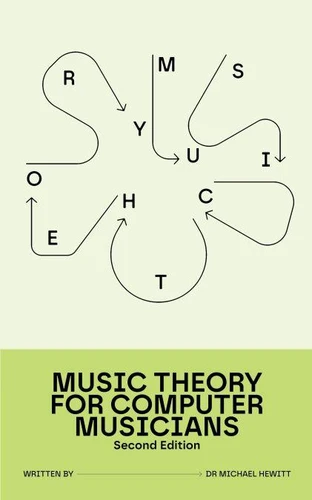
Music Theory for Computer Musicians: Second Edition. For Computer Musicians, #1
Par :Formats :
Disponible dans votre compte client Decitre ou Furet du Nord dès validation de votre commande. Le format ePub est :
- Compatible avec une lecture sur My Vivlio (smartphone, tablette, ordinateur)
- Compatible avec une lecture sur liseuses Vivlio
- Pour les liseuses autres que Vivlio, vous devez utiliser le logiciel Adobe Digital Edition. Non compatible avec la lecture sur les liseuses Kindle, Remarkable et Sony
 , qui est-ce ?
Notre partenaire de plateforme de lecture numérique où vous retrouverez l'ensemble de vos ebooks gratuitement
Pour en savoir plus sur nos ebooks, consultez notre aide en ligne ici
C'est si simple ! Lisez votre ebook avec l'app Vivlio sur votre tablette, mobile ou ordinateur :

- FormatePub
- ISBN8232160418
- EAN9798232160418
- Date de parution14/12/2025
- Protection num.pas de protection
- Infos supplémentairesepub
- ÉditeurDraft2Digital
Résumé
Whether you are a beginner to music production or a seasoned professional looking to brush up on your music theory knowledge, this book is for you. Many electronic music producers, DJs, or gigging musicians know their tools, yet they struggle with the language of music itself. The second edition of the world-renowned Music Theory for Computer Musicians is the definitive guide to learning the language of music.
This book translates music theory into your music production workflow by making it simple, accessible, and relevant. Whether you use Ableton Live, Logic Pro, or any other DAW, author Dr Michael Hewitt connects core concepts directly to the piano roll through screenshots and practical exercises. Key topics include: Production basics: Build your fundamental understanding of sound, noise, and tone. MIDI sequencing: Learn how to use the MIDI environment, with topics such as editing, quantisation, velocity, and automation.
Rhythmic design: Discover the origins of common drum sounds, and harness the power of metre to program complex, fascinating percussion. The language of melody: Construct better melodies using your new knowledge of pitch classes, scales, clefs, and intervals. Harmonic structure: Create memorable music using advanced chord structures, modulation, and the Circle of Fifths. Melodic depth: Go beyond the basics with the seven diatonic modes, pentatonic leads, complex harmony, arpeggiation, and microtuning.
From the very first chapter, this accessible, yet comprehensive book will help you unlock the secrets to better music production!
This book translates music theory into your music production workflow by making it simple, accessible, and relevant. Whether you use Ableton Live, Logic Pro, or any other DAW, author Dr Michael Hewitt connects core concepts directly to the piano roll through screenshots and practical exercises. Key topics include: Production basics: Build your fundamental understanding of sound, noise, and tone. MIDI sequencing: Learn how to use the MIDI environment, with topics such as editing, quantisation, velocity, and automation.
Rhythmic design: Discover the origins of common drum sounds, and harness the power of metre to program complex, fascinating percussion. The language of melody: Construct better melodies using your new knowledge of pitch classes, scales, clefs, and intervals. Harmonic structure: Create memorable music using advanced chord structures, modulation, and the Circle of Fifths. Melodic depth: Go beyond the basics with the seven diatonic modes, pentatonic leads, complex harmony, arpeggiation, and microtuning.
From the very first chapter, this accessible, yet comprehensive book will help you unlock the secrets to better music production!