THOMAS STEARNS ELIOT was born in St Louis, Missouri, in 1888. He moved to England in 1914 and published his first book of poems in 1917. He received the Nobel Prize in Literature in 1948. Eliot died in 1965.
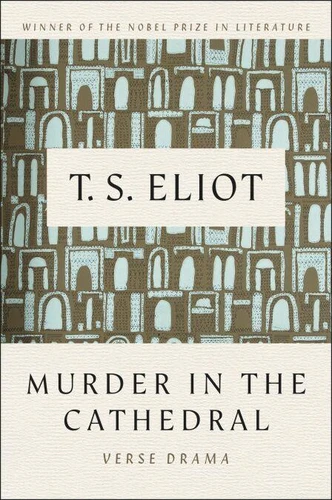
Murder in the Cathedral
Par :Formats :
Disponible dans votre compte client Decitre ou Furet du Nord dès validation de votre commande. Le format ePub protégé est :
- Compatible avec une lecture sur My Vivlio (smartphone, tablette, ordinateur)
- Compatible avec une lecture sur liseuses Vivlio
- Pour les liseuses autres que Vivlio, vous devez utiliser le logiciel Adobe Digital Edition. Non compatible avec la lecture sur les liseuses Kindle, Remarkable et Sony
- Non compatible avec un achat hors France métropolitaine
 , qui est-ce ?
Notre partenaire de plateforme de lecture numérique où vous retrouverez l'ensemble de vos ebooks gratuitement
Pour en savoir plus sur nos ebooks, consultez notre aide en ligne ici
C'est si simple ! Lisez votre ebook avec l'app Vivlio sur votre tablette, mobile ou ordinateur :

- Nombre de pages96
- FormatePub
- ISBN978-0-547-54260-7
- EAN9780547542607
- Date de parution25/02/2014
- Protection num.Adobe DRM
- Infos supplémentairesepub
- ÉditeurEcco
Résumé
T. S. Eliot's most famous verse drama, a retelling of the murder of the archbishop of CanterburyMurder in the Cathedral, written for the Canterbury Festival in 1935, was one of T. S. Eliot's first dramatic achievements, and it remains one of the great plays of the century. It takes as its subject matter the martyrdom of Thomas Becket, Archbishop of Canterbury, depicting the political intrigue and events that led to his assassination, in his own cathedral church, by the knights of Henry II in 1170.
Like Greek drama, the play's theme and form are rooted in religion, ritual purgation and renewal, and it was this return to the earliest sources of drama that brought poetry triumphantly back to the English stage at the time."The theatre is enriched by this poetic play of grave beauty and momentous decision." -The New York Times When a king's ambition clashes with God's will, where does a man's true loyalty lie? Historical Drama: Experience the fatal clash between Archbishop Thomas Becket and King Henry II, a conflict of church and state that culminates in the archbishop's 1170 assassination inside Canterbury Cathedral.
Spiritual Temptation: Witness Becket's internal struggle as four tempters challenge his resolve, forcing him to confront the ultimate treason: doing the right deed for the wrong reason. Inspired by Greek Tragedy: Discover a play structured like a classical drama, complete with a Chorus of Canterbury women who comment on the action and give voice to the fears of the common people. Lyrical Verse: Immerse yourself in the powerful, poetic language of T.
S. Eliot, which brought verse triumphantly back to the modern English stage.
Like Greek drama, the play's theme and form are rooted in religion, ritual purgation and renewal, and it was this return to the earliest sources of drama that brought poetry triumphantly back to the English stage at the time."The theatre is enriched by this poetic play of grave beauty and momentous decision." -The New York Times When a king's ambition clashes with God's will, where does a man's true loyalty lie? Historical Drama: Experience the fatal clash between Archbishop Thomas Becket and King Henry II, a conflict of church and state that culminates in the archbishop's 1170 assassination inside Canterbury Cathedral.
Spiritual Temptation: Witness Becket's internal struggle as four tempters challenge his resolve, forcing him to confront the ultimate treason: doing the right deed for the wrong reason. Inspired by Greek Tragedy: Discover a play structured like a classical drama, complete with a Chorus of Canterbury women who comment on the action and give voice to the fears of the common people. Lyrical Verse: Immerse yourself in the powerful, poetic language of T.
S. Eliot, which brought verse triumphantly back to the modern English stage.